


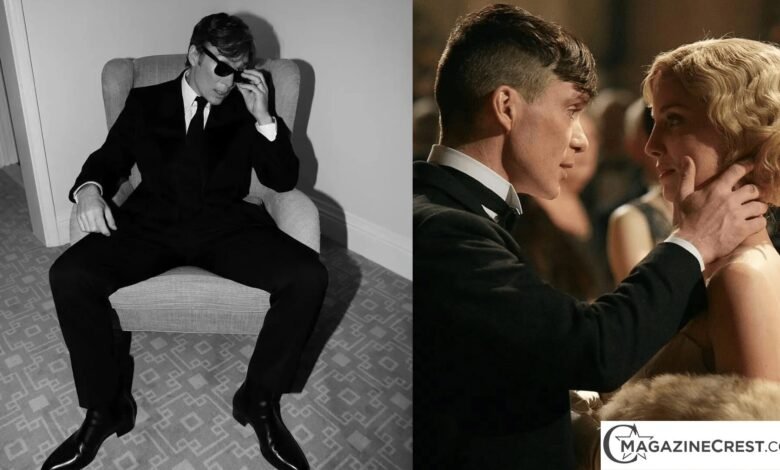
You know those piercing blue eyes that made Tommy Shelby unforgettable? The same ones that conveyed the moral weight of creating the atomic bomb? Behind them is Cillian Murphy, an Irish actor who spent two decades building one of cinema’s most fascinating careers before finally claiming his Oscar in 2024. While Hollywood churned out traditional leading men, Murphy quietly became something far more interesting: a chameleon who could disappear into twisted villains, traumatized gangsters, and brilliant physicists with equal conviction. Now, at 49, he’s not just an Academy Award winner—he’s proof that you can reach the summit without compromising your artistic soul or abandoning your Irish roots.
From almost becoming a rock star in Cork to terrorizing Gotham as Scarecrow, from commanding the Peaky Blinders to embodying the father of the atomic bomb, Murphy’s journey defies every Hollywood playbook. He’s the actor who turned down Los Angeles for Dublin, who avoids social media like the plague, and who somehow became a global icon while remaining one of the industry’s most private figures.
This is the complete story of Cillian Murphy—where he came from, how he built a career on his own terms, and why 2026 finds him more relevant than ever.
Quick Facts: Cillian Murphy at a Glance
Full Name: Cillian Murphy
Born: May 25, 1976 (Age 49)
Birthplace: Douglas, Cork, Ireland
Height: 5’9″ (1.75m)
Spouse: Yvonne McGuinness (married 2004)
Children: Two sons (Malachy and Aran Murphy)
Cillian Murphy Awards: Academy Award (Best Actor), BAFTA, Golden Globe, SAG Award
Famous For: Tommy Shelby in Peaky Blinders, J. Robert Oppenheimer in Oppenheimer, Scarecrow in The Dark Knight trilogy
Current Status: Oscar-winning actor, returning for 28 Years Later and Peaky Blinders film
Who is Cillian Murphy?
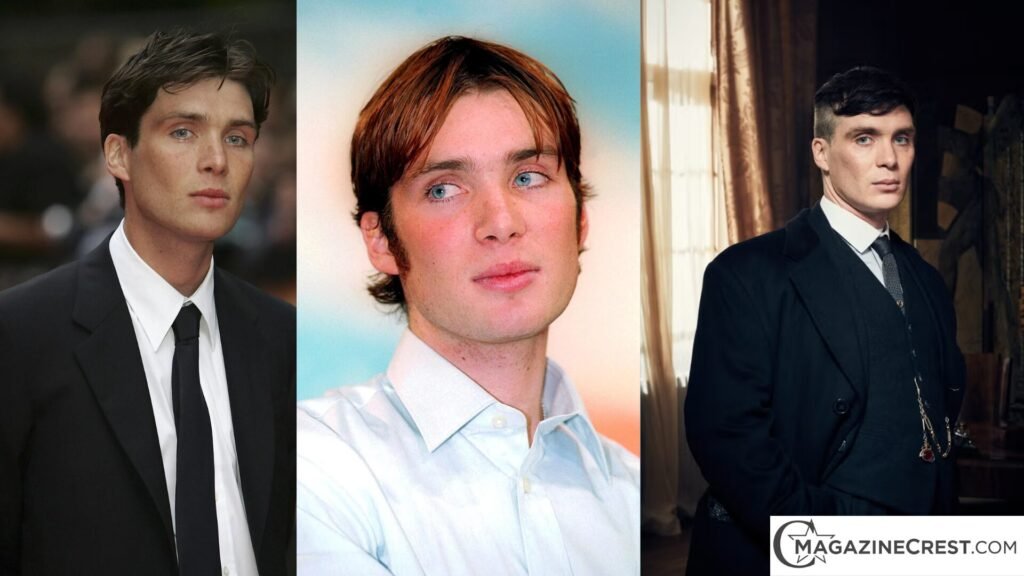
Cillian Murphy is an Irish actor whose career reads like a masterclass in artistic integrity meeting commercial success. Born in Cork in 1976, he’s spent 25 years carving out a unique space in cinema—equally comfortable in Christopher Nolan’s cerebral blockbusters and gritty independent dramas.
What makes Murphy different? He’s the rare actor who became a household name without ever chasing traditional stardom. Those distinctive blue eyes and chiseled features could have made him a conventional leading man, but Murphy had other plans. Instead, he built his reputation on transformation: the menacing Dr. Crane in Batman Begins, the calculating Tommy Shelby in Peaky Blinders, the haunted Oppenheimer contemplating the bomb that changed everything.
His six-film collaboration with Christopher Nolan represents one of modern cinema’s most fruitful director-actor partnerships. From supporting roles in Batman Begins, Inception, and Dunkirk to finally landing the lead in Oppenheimer, Murphy proved he could anchor a $100 million epic while maintaining the intensity he honed in Irish theaters.
But here’s what really sets him apart: Murphy left Hollywood on his own terms. After years in London, he moved his family back to Dublin in 2015, choosing Irish authenticity over red carpets. He doesn’t do social media. He rarely appears on talk shows. He’s vegetarian, intensely private, and completely uninterested in celebrity culture.
The result? An actor who commands respect across every demographic. Film critics praise his chameleonic range. Younger audiences discovered him through Peaky Blinders memes. Industry veterans recognized his Oscar win as long overdue. He’s simultaneously an art-house darling and a box office draw—a combination nearly impossible to achieve in modern cinema.
In 2026, Murphy stands at an interesting crossroads. Fresh off his Oppenheimer triumph, he’s returning to the post-apocalyptic world of 28 Days Later and reprising Tommy Shelby for a Peaky Blinders film. He’s proven he can lead a Best Picture winner, yet he shows no signs of abandoning the creative risks that defined his career.
Early Life & Family Background
Childhood in Douglas, Cork
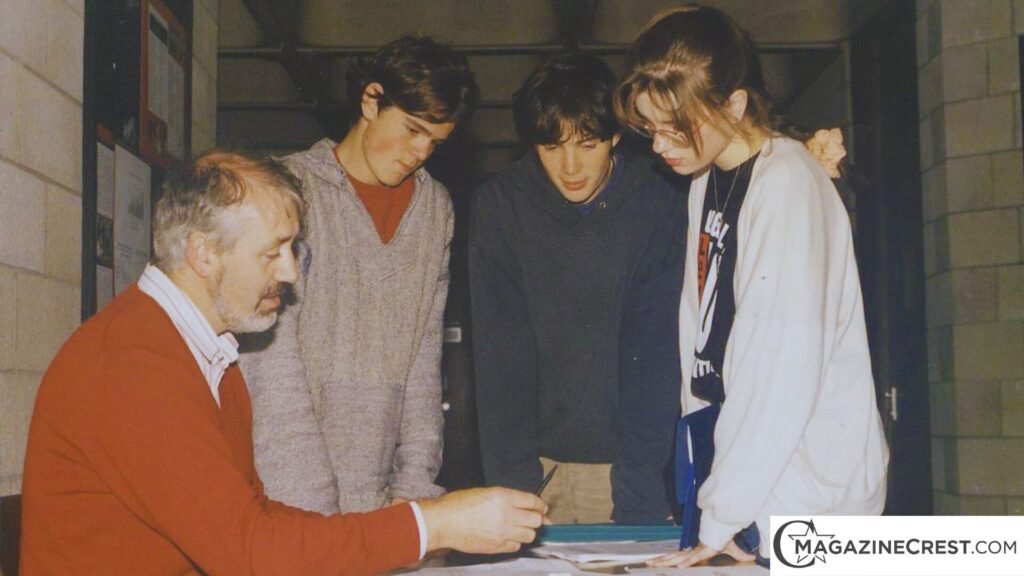
Cillian Murphy’s story begins in Douglas, a suburb of Cork on Ireland’s southern coast, where he was born on May 25, 1976. His father, Brendan Murphy, worked for the Irish Department of Education, while his mother, Mary Murphy, taught French. Growing up in a household that valued education and culture, young Cillian seemed destined for a conventional professional path.
He attended Presentation Brothers College, a Catholic school in Cork, where he was, by his own admission, more interested in artistic pursuits than athletics. Unlike many Irish boys focused on Gaelic football or hurling, Murphy gravitated toward music and eventually theater. His siblings—brother Páidi and sisters Sile and Orla Murphy—grew up in the same culturally rich but modest environment that would later inform Cillian’s grounded approach to fame.
The Cork of Murphy’s youth wasn’t a center of film production or theatrical innovation, but it had a vibrant local arts scene. This regional Irish identity—distinct from Dublin’s cosmopolitan energy—would become central to how Murphy understood himself as an artist. Cork bred in him a certain skepticism of pretension and an appreciation for authenticity that still defines his career choices.
Education & Early Interests
Murphy’s path to acting was anything but direct. He enrolled at University College Cork to study law, presumably following a sensible career trajectory that would have pleased his educator parents. But his heart wasn’t in torts and contracts—it was in music.
During his university years, Murphy formed a band called The Sons of Mr. Green Genes, a Frank Zappa tribute act that showed serious ambition. They weren’t just playing college pubs; they caught the attention of Acid Jazz Records, a respected label that nearly signed them. For a young man from Cork, this represented a legitimate shot at musical success.
So why didn’t Murphy become a rock star? According to the actor himself, the band was offered a five-album deal, but there was a catch: they’d have to relinquish rights to their compositions. Murphy and his bandmates declined. It’s a decision that reveals something essential about his character—even at 19 or 20, he understood the value of creative control and wasn’t willing to compromise artistic ownership for commercial opportunity.
The collapse of his music dreams coincided with his first serious exposure to theater. Murphy attended a production by the Corcadorca Theatre Company, an experimental Cork-based group, and something clicked. He was captivated not by the glamour of performance but by its raw transformative power. Soon after, he dropped out of law school entirely, a decision that initially horrified his parents but ultimately changed the trajectory of Irish cinema.
Family Influence
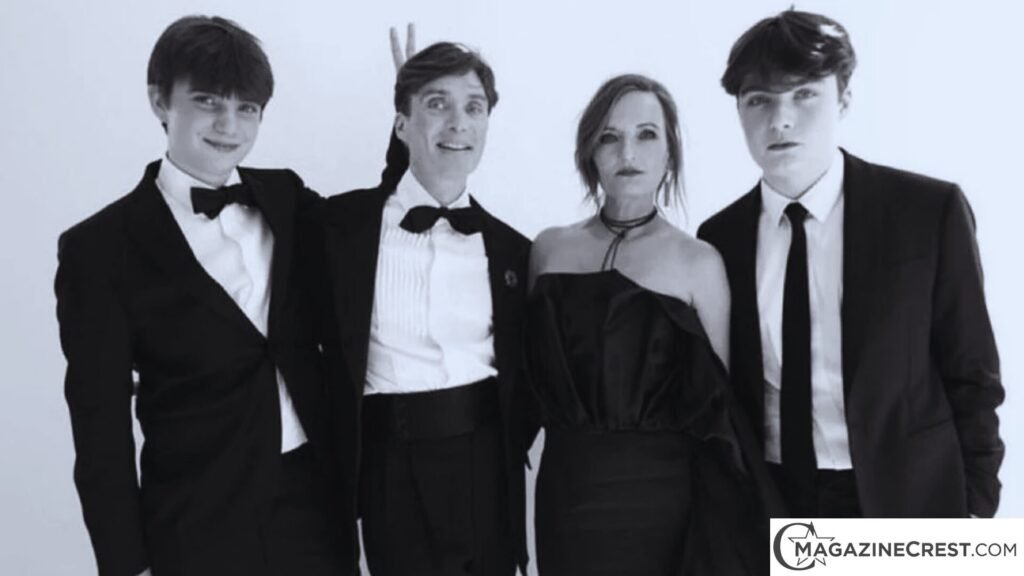
The Murphy family’s reaction to Cillian’s career pivot reveals the tensions many artists face. His father, working in education, had raised his children to value stability and conventional success. Dropping out of university to pursue acting—especially in 1990s Ireland, where the film industry was limited—seemed reckless.
But the Murphys also instilled in their son a fierce independence and intellectual curiosity. His brother Páidi remained an important figure in his life, someone who understood the artistic impulses that drove Cillian’s choices. The family’s French-Irish cultural blend (through his mother’s teaching and background) exposed Murphy to broader European artistic traditions beyond insular Irish culture.
Most importantly, growing up in Cork rather than Dublin or London kept Murphy grounded. He witnessed his parents’ work ethic, their dedication to public service through education, and their modest lifestyle. These values would later manifest in Murphy’s refusal to embrace Hollywood excess, his decision to raise his own children away from the spotlight, and his lifelong discomfort with celebrity culture.
Ireland in the 1970s and 80s was also emerging from decades of economic struggle and political violence related to Northern Ireland’s Troubles. While Cork was geographically removed from the worst of the conflict, the cultural atmosphere of uncertainty, Catholic conservatism, and eventual modernization shaped Murphy’s generation. This context informs his later choices to play IRA-era characters and engage with Irish political issues—he understands that history from the inside.
From Rock Star Dreams to Theater Stardom
Musical Beginnings
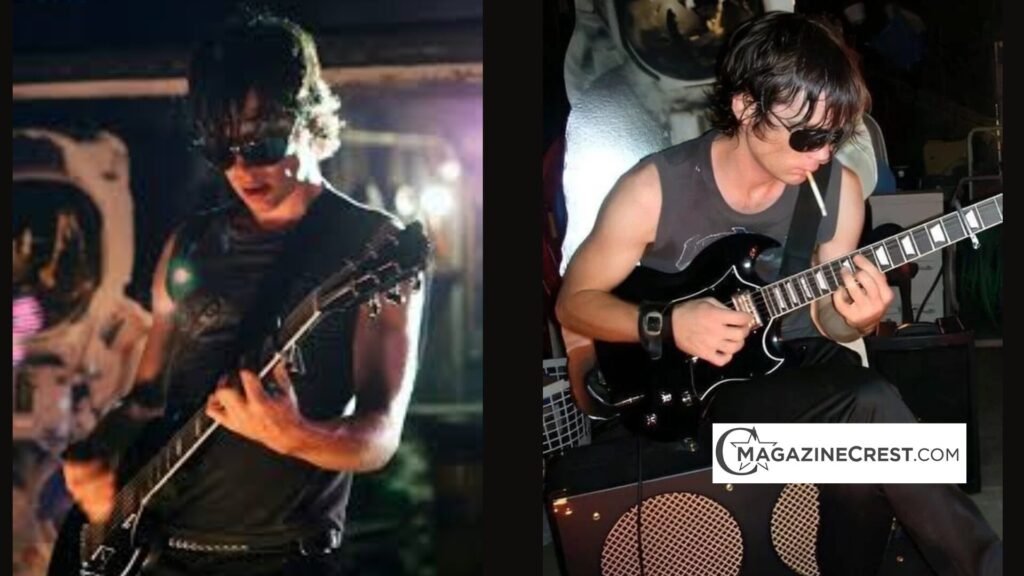
Before Cillian Murphy became one of cinema’s most compelling character actors, he seriously pursued music. The Sons of Mr. Green Genes wasn’t a vanity project—it was a legitimate band that performed across Cork and built a regional following in the mid-1990s. Named after a Frank Zappa composition, the group reflected Murphy’s taste for experimental, intelligent rock rather than commercial pop.
Playing guitar and contributing to the band’s original compositions, Murphy experienced his first taste of performance and creative collaboration. The near-signing with Acid Jazz Records represented a genuine crossroads. Had he accepted their terms, Murphy might have spent the late 1990s touring European clubs instead of appearing in Irish theaters.
What’s fascinating is how Murphy talks about this period. He doesn’t express regret about the music career that never happened. Instead, he recognizes that music taught him about rhythm, timing, and emotional expression—skills that translated directly to acting. The discipline of rehearsing, the vulnerability of performing, the collaborative nature of creating something larger than yourself: all of these became foundational to his approach to character work.
Even today, Murphy maintains that music remains deeply important to him personally, even if he no longer pursues it professionally. The soundtrack selections in Peaky Blinders, which blended period-appropriate music with anachronistic modern tracks, reflected his continued engagement with how music shapes emotional experience.
Corcadorca Theatre Company
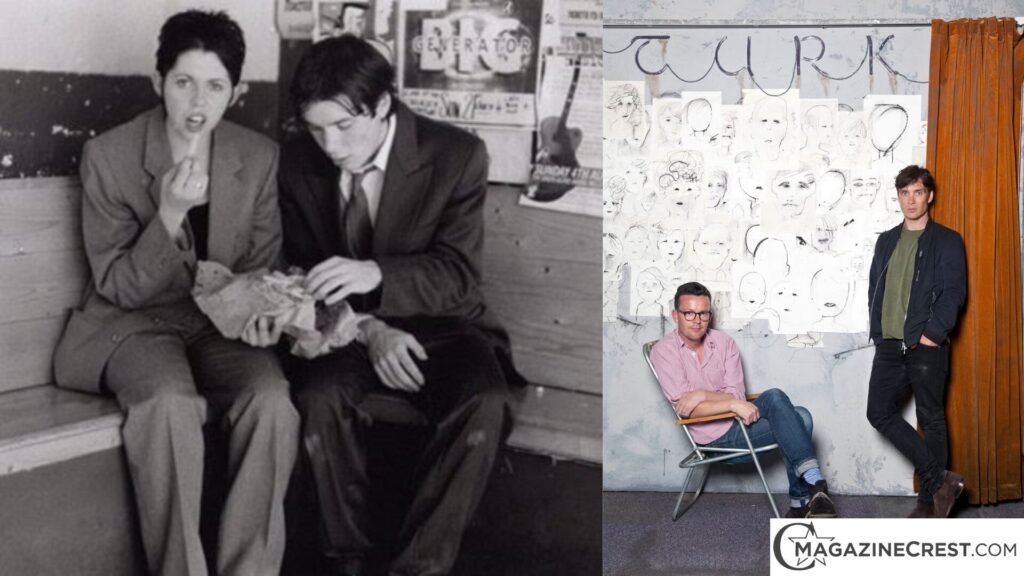
In 1996, Murphy’s creative life took its decisive turn when he joined the Corcadorca Theatre Company, an experimental Cork-based group known for unconventional productions and site-specific performances. Founded by director Pat Kiernan, Corcadorca represented everything traditional Irish theater wasn’t—edgy, physical, willing to stage productions in warehouses and abandoned buildings rather than conventional theaters.
For a 20-year-old who’d just abandoned law school, Corcadorca offered something invaluable: immediate immersion in serious theatrical work without the need to move to Dublin or London. Murphy threw himself into the company’s rigorous approach to performance, learning everything from movement work to voice projection to the psychological preparation required for intense dramatic roles.
The company’s collaborative ethos appealed to Murphy’s sensibilities. Unlike commercial theater with its clear hierarchies and star systems, Corcadorca functioned more like his band had—a collective of artists working together toward a shared creative vision. This early experience with ensemble work would later make Murphy an ideal collaborator for directors like Christopher Nolan and Ken Loach, who value actors willing to serve the project rather than demanding spotlight.
Working with Corcadorca also connected Murphy to playwright Enda Walsh, a Cork native whose sharp, poetic, often brutal dramatic writing matched Murphy’s own artistic instincts. This relationship would produce the work that changed everything: Disco Pigs.
Disco Pigs Breakthrough
If there’s a single moment when Cillian Murphy’s destiny shifted irrevocably toward acting, it was landing the lead role in Enda Walsh’s Disco Pigs in 1996. The two-character play, which Murphy performed opposite Eileen Walsh (no relation to the playwright), told the story of Pig and Runt, two teenagers in Cork with an intense, codependent relationship and their own invented language.
The role demanded everything from Murphy: physical intensity, emotional rawness, linguistic creativity, and the ability to make a potentially unlikeable character compelling. His Pig was volatile, tender, frightening, and heartbreaking—often within the same scene. The performance announced the arrival of a major talent.
Disco Pigs premiered at the Dublin Theatre Festival, where it immediately generated buzz. Critics recognized something special in Murphy’s performance—a complete commitment and emotional availability rare in someone so young. The production transferred to London and toured internationally, including a acclaimed run at the Edinburgh International Festival.
For Murphy, the experience was transformative. He’d found his calling. The preparation required, the nightly emotional expenditure, the direct connection with audiences, the collaborative creative process—all of it felt more fulfilling than anything he’d experienced with music. And unlike the music industry’s offer that required surrendering creative control, theater allowed Murphy to retain artistic integrity while developing his craft.
In 2001, Disco Pigs was adapted into a film with Murphy reprising his stage role. While the movie didn’t achieve blockbuster success, it served as Murphy’s calling card to the film industry. Directors and casting agents who saw either the stage production or the film recognized they were watching an actor capable of carrying complex material with naturalistic intensity.
The lesson Murphy learned from Disco Pigs would guide his entire career: take creative risks, commit fully to challenging roles, and trust that quality work finds its audience. It’s a philosophy that eventually led him from Cork theaters to the Oscars stage, even if the journey took longer than conventional wisdom suggests it should.
Hollywood Breakthrough & International Recognition
28 Days Later (2002)
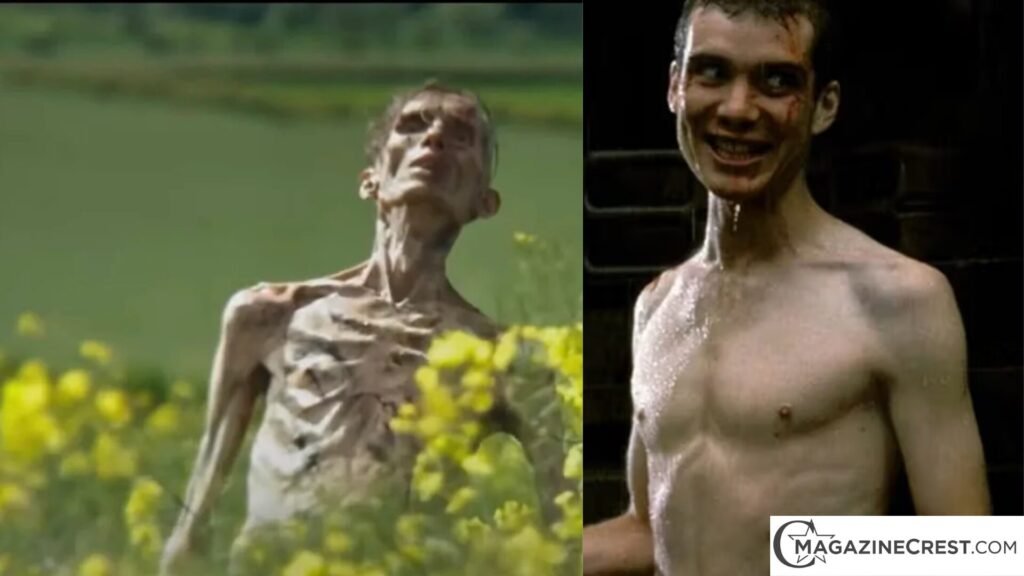
Danny Boyle’s 28 Days Later didn’t just launch Cillian Murphy’s international film career—it redefined the zombie genre for the 21st century. When Boyle cast the then-unknown Murphy as Jim, a bicycle courier who awakens from a coma into a post-apocalyptic London, he was taking a calculated risk on an actor whose biggest credit was an Irish indie film most audiences hadn’t seen.
Murphy’s Jim became iconic because he subverted action-hero conventions. Instead of a muscular survivor, Murphy played Jim as vulnerable, confused, and genuinely terrified. That opening sequence—Murphy’s Jim wandering through an abandoned London, completely alone and bewildered—remains one of cinema’s most effective post-apocalyptic images precisely because Murphy’s performance made the horror feel real rather than cinematic.
Shot guerrilla-style on digital video with a tiny budget, 28 Days Later became a surprise global hit, earning over $82 million worldwide. Critics praised Murphy’s grounded performance in what could have been a standard horror setup. He won the Best Newcomer award at the Empire Awards and earned an MTV Movie Award nomination for Best Breakthrough Performance.
What made Murphy’s work in 28 Days Later career-defining wasn’t just the film’s success—it was how he approached the material. Rather than playing Jim as a generic protagonist, Murphy found the character’s humanity: his grief over discovering his parents’ fate, his moral conflict over violence, his gradual transformation from victim to survivor. It was serious acting in a genre film, a template Murphy would repeat throughout his career with Christopher Nolan’s Batman films and other genre work.
The film also established Murphy’s international marketability. Hollywood took notice. Here was a distinctive-looking Irish actor who could anchor a commercial film while maintaining indie credibility—a rare combination that opened doors across the industry.
Early 2000s Film Work
Following 28 Days Later’s success, Murphy could have easily been typecast in horror or action films. Instead, he made strategic choices that showcased his versatility and signaled his ambitions as a character actor rather than a conventional leading man.
In Cold Mountain (2003), Anthony Minghella’s Civil War epic, Murphy played a Confederate deserter opposite Jude Law and Nicole Kidman. It was a small but memorable role in a prestigious production, connecting Murphy with A-list talent and demonstrating his ability to hold his own in ensemble casts. Similarly, his appearance in Girl with a Pearl Earring (2003) alongside Scarlett Johansson and Colin Firth placed him in tasteful period dramas that expanded his resume beyond genre work.
Closer to home, Murphy starred in Intermission (2003), an Irish crime comedy that reunited him with Colin Farrell and proved Murphy could handle comedy and lighter material. The film was a massive hit in Ireland and showed Murphy hadn’t abandoned his roots despite Hollywood interest.
Then came Red Eye (2005), Wes Craven’s taut thriller that gave Murphy his first significant Hollywood villain role. As Jackson Rippner, a charming sociopath who terrorizes Rachel McAdams’s character during a red-eye flight, Murphy demonstrated the chilling intensity that would serve him well as Scarecrow in Batman Begins (released the same year). Entertainment Weekly praised his “seductive, sinister” performance, while critics noted how Murphy’s distinctive features—those blue eyes and sharp cheekbones—made him both attractive and unsettling.
This period established Murphy’s pattern: mix commercial projects with artistic ones, take supporting roles in prestige films rather than leading roles in mediocre ones, and never stop working in theater and Irish productions even as Hollywood opportunities increased.
Breakfast on Pluto (2005)
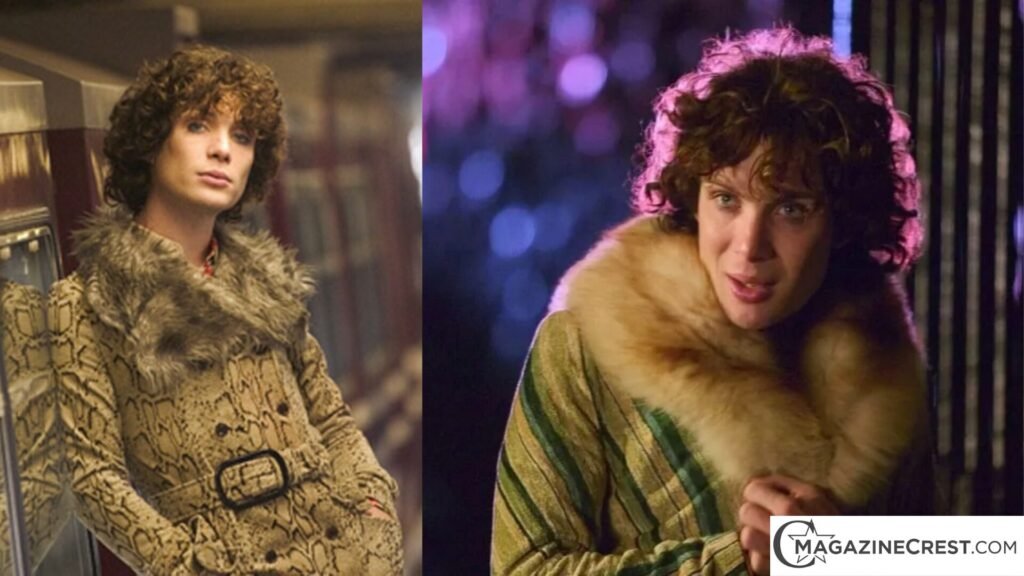
Neil Jordan’s Breakfast on Pluto represents one of Cillian Murphy’s most daring and transformative performances. Playing Patrick “Kitten” Braden, a transgender woman navigating 1970s Ireland and London during the Troubles, Murphy took on a role that demanded complete vulnerability and empathy.
Based on Patrick McCabe’s novel, the film follows Kitten’s journey from an Irish small town—where being different meant being despised—to London’s underbelly, where she searches for her birth mother while surviving through sex work, all against the backdrop of IRA violence. The role required Murphy to fully embody Kitten’s femininity, her resilience, her humor, and her heartbreak without ever reducing the character to stereotype or caricature.
Murphy prepared extensively, working with Jordan to understand the character’s psychology and the historical context of transgender experience in Ireland during that era. His performance walked a delicate line: making Kitten’s gender identity matter to the story without making it the only thing about her. She’s fully realized—naive but savvy, wounded but optimistic, tragic but never pitiful.
Critics responded with widespread acclaim. Roger Ebert praised Murphy’s “brave and touching” performance. The New York Times called it a revelation. Murphy earned a Golden Globe nomination for Best Actor in a Comedy or Musical—significant recognition that confirmed his ability to carry a film and tackle challenging material with sensitivity and skill.
What’s particularly notable about Breakfast on Pluto is Murphy’s willingness to take the role at all. In 2005, transgender representation in mainstream cinema was minimal, and playing such a character carried risks for an actor trying to establish himself internationally. Murphy took the role because it was artistically compelling, not because it was safe—a decision emblematic of his entire approach to career building.
The film’s commercial performance was modest, but its critical success and Murphy’s nomination elevated his status. He was no longer just the guy from 28 Days Later or a supporting player in ensemble films—he was an actor capable of carrying complex, unconventional material with grace and authenticity.
The Wind That Shakes the Barley (2006)
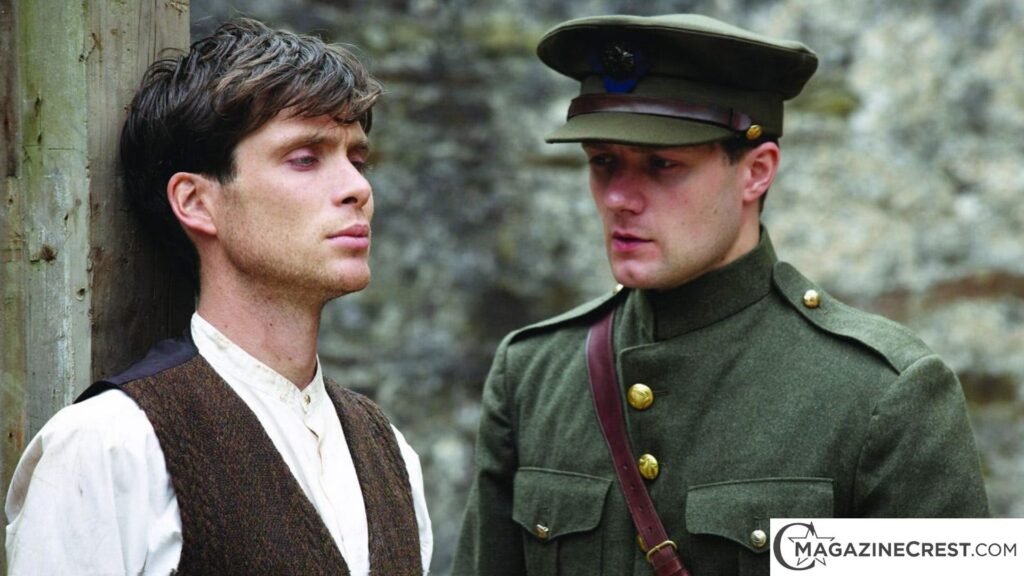
Following Breakfast on Pluto, Murphy immediately dove into another challenging Irish historical drama: Ken Loach’s The Wind That Shakes the Barley. Where Breakfast on Pluto was flamboyant and stylized, Loach’s film was naturalistic and politically charged, examining the Irish War of Independence and Civil War through the story of two brothers on opposite sides of the conflict.
Murphy played Damien O’Donovan, a doctor turned IRA fighter who watches his revolutionary ideals collide with brutal reality. It’s a performance of mounting intensity—Damien begins as an idealistic young man committed to Irish freedom and gradually hardens into someone capable of terrible violence in service of political goals. The role required Murphy to convey both revolutionary fervor and the psychological cost of that commitment.
Working with Loach, known for his naturalistic directing style and political commitment, pushed Murphy in new directions. Loach often doesn’t give actors full scripts, preferring to keep them uncertain about what happens next, forcing more spontaneous, realistic reactions. Murphy thrived under these conditions, delivering what many consider his finest purely dramatic performance to that point.
The film won the Palme d’Or at the Cannes Film Festival, the festival’s highest honor, giving Murphy his first association with that level of critical prestige. Reviews praised his ability to show Damien’s political radicalization without losing the character’s humanity. This was crucial—Damien does morally questionable things, but Murphy never lets him become simply a hero or villain.
The Wind That Shakes the Barley also represented Murphy’s engagement with Irish political history in a direct, uncompromising way. The film didn’t romanticize the independence struggle; it showed its violence, its internal contradictions, its tragic necessity. For Murphy, an Irish actor who’d built his career partly on international appeal, this was a statement: he wouldn’t abandon difficult Irish stories for easier Hollywood roles.
Together, Breakfast on Pluto and The Wind That Shakes the Barley showcased Murphy’s extraordinary range within a single year. One film featured him in drag, wearing makeup and embracing flamboyant femininity; the other showed him as a revolutionary fighter hardened by war. Few actors could credibly inhabit both extremes, but Murphy made both characters feel authentic and lived-in.
By 2006, Murphy had established himself as one of the most versatile and respected actors of his generation. He could do genre films like 28 Days Later and Red Eye. He could do prestige period dramas. He could transform himself physically and emotionally for challenging roles. And crucially, he’d maintained his Irish identity and commitment to meaningful work rather than chasing maximum commercial success.
All of this made him perfect for a role that would define the next phase of his career: Dr. Jonathan Crane, better known as the Scarecrow, in Christopher Nolan’s Batman Begins.
The Dark Knight Trilogy: Becoming Scarecrow
Batman Begins (2005)
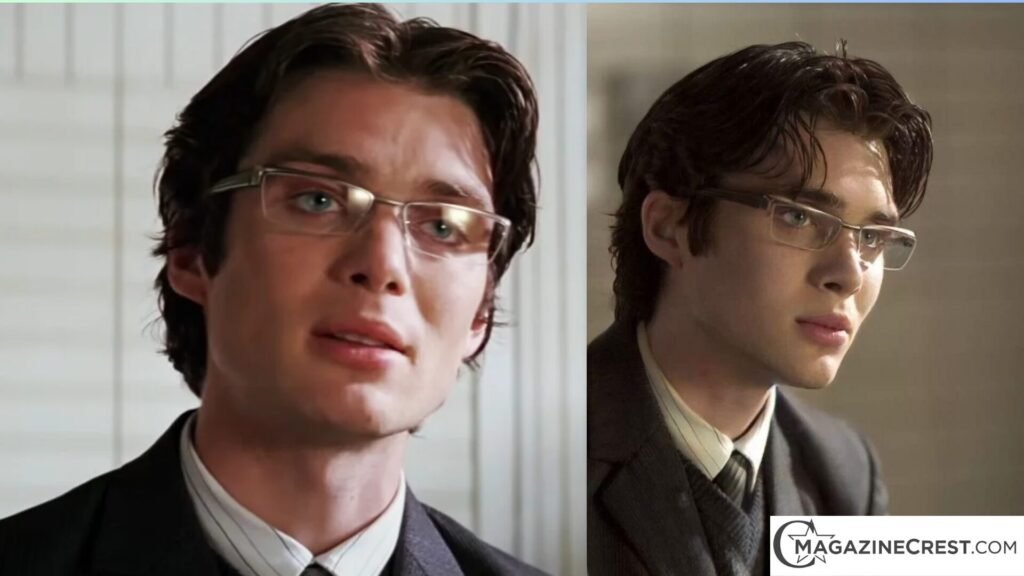
The story of how Cillian Murphy became Scarecrow is one of Hollywood’s interesting near-misses. When Christopher Nolan began casting Batman Begins, Murphy actually auditioned for Bruce Wayne himself. By his own admission, Murphy knew he wasn’t right for Batman—at 5’9″ with a slender build, he lacked the physical presence Nolan needed for the Caped Crusader. But the audition revealed something valuable: Murphy had exactly the qualities Nolan wanted for one of Batman’s most psychologically complex villains.
Dr. Jonathan Crane, the psychiatrist at Arkham Asylum who uses fear toxins to terrorize his victims, required an actor who could be both credible and unsettling. Murphy’s distinctive features—those piercing blue eyes, sharp cheekbones, and an intensity that could flip from professional to predatory—made him perfect for a villain whose weapon was psychological rather than physical.
Murphy approached Scarecrow as a real psychiatrist who happens to be twisted rather than a comic book villain who happens to be a doctor. His Crane is controlled, articulate, and chillingly rational about his horrific experiments. When he dons the burlap mask and becomes Scarecrow proper, Murphy’s voice work and physical performance make the character genuinely frightening without relying on over-the-top theatrics.
The scenes where Crane/Scarecrow terrorizes his victims with fear toxin showcase Murphy’s ability to be menacing without raising his voice. There’s something particularly disturbing about his calm, almost clinical interest in his victims’ terror. It’s a more intellectual brand of villainy than most superhero films attempt, perfectly suited to Nolan’s grounded, realistic take on the Batman mythology.
Batman Begins became a critical and commercial triumph, revitalizing a franchise that had cratered with Batman & Robin. While Christian Bale’s Batman and Heath Ledger’s later Joker would dominate discussions of the trilogy, Murphy’s Scarecrow provided something equally important: proof that Nolan’s Gotham could accommodate genuinely frightening psychological horror alongside action spectacle.
The Dark Knight (2008)
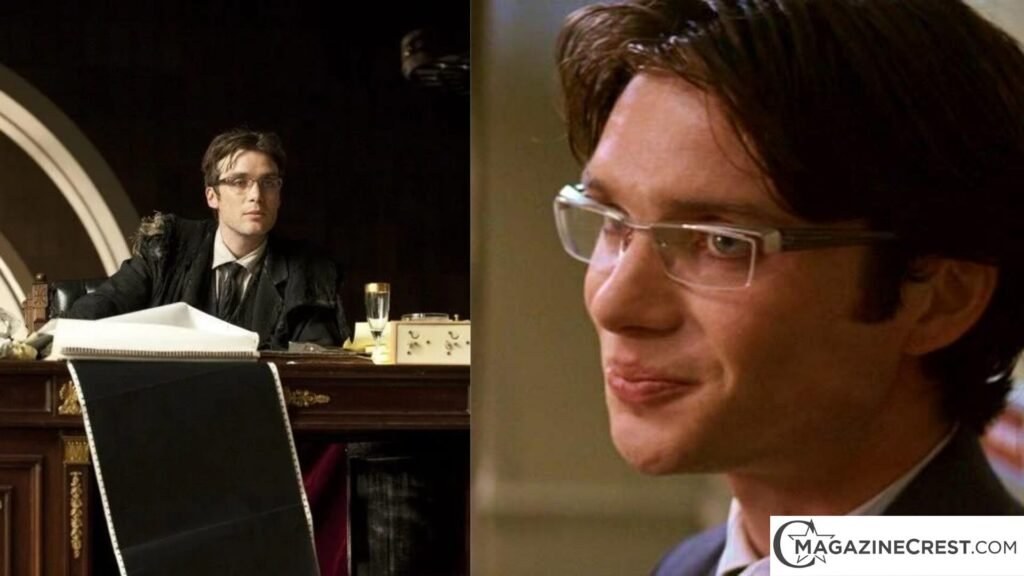
Murphy’s return in The Dark Knight was brief but memorable. Scarecrow appears in the opening sequence, dealing drugs laced with fear toxin in a Gotham parking garage before Batman intervenes. It’s essentially a cameo, but it serves important narrative functions: it shows that Batman’s presence has pushed costumed criminals underground, and it maintains continuity with Batman Begins while clearing the deck for Heath Ledger’s Joker to dominate the story.
What’s notable is that Murphy agreed to return for such a small role. By 2008, his profile had risen considerably, yet he trusted Nolan’s vision enough to contribute however the story required. This collaborative spirit—being willing to serve the larger project rather than demanding more screen time—exemplified Murphy’s approach to his career and helped cement his relationship with Nolan.
The Dark Knight became a cultural phenomenon, earning over $1 billion worldwide and garnering Heath Ledger a posthumous Oscar for his Joker performance. Murphy’s Scarecrow was a small part of something massive, and his willingness to participate without ego further endeared him to Nolan.
The Dark Knight Rises (2012)
Murphy made his final Scarecrow appearance in The Dark Knight Rises, appearing as part of Bane’s kangaroo court judging Gotham’s elite during the city’s occupation. Again, it’s a small role, but Murphy brings the same commitment he’d brought to the first two films. His Scarecrow, now unmasked and acting as a “judge” in a mockery of justice, represents how far Gotham has fallen under Bane’s rule.
These brief appearances in the sequels created an interesting legacy: Murphy’s Scarecrow is the only villain to appear in all three films of Nolan’s trilogy. It’s a distinction that speaks to both the character’s importance to Nolan’s vision and Murphy’s reliability as a collaborator.
Impact on Career
The Dark Knight trilogy accomplished something crucial for Murphy’s career trajectory: it gave him mainstream recognition without typecasting him or compromising his artistic credibility. Scarecrow was memorable enough that audiences recognized Murphy, but the role was supporting enough that he wasn’t defined by it. He could still take risks with characters like the ones in The Wind That Shakes the Barley or Breakfast on Pluto.
Moreover, the trilogy established Murphy’s working relationship with Christopher Nolan, one of cinema’s most influential directors. Nolan would cast Murphy in three more films—Inception, Dunkirk, and ultimately Oppenheimer—creating one of modern cinema’s most fruitful director-actor partnerships.
The financial success of the Batman films also gave Murphy the freedom to be selective. He didn’t need to take every offered role for financial security. He could choose projects based on artistic merit, director quality, and script strength rather than paycheck size. This freedom allowed him to maintain the creative control he’d insisted on since turning down that music contract in his twenties.
Perhaps most importantly, the Batman experience taught Murphy how to work within massive productions without losing his focus on character. Nolan’s sets are known for their professionalism and creative collaboration, and Murphy absorbed lessons about balancing commercial and artistic demands that would serve him throughout his career.
By the time The Dark Knight Rises concluded in 2012, Cillian Murphy had appeared in three of the most successful films of the century. But rather than leveraging that success into conventional stardom, he was about to take on a role that would define him for a new generation: Tommy Shelby in Peaky Blinders.
Peaky Blinders: The Tommy Shelby Phenomenon
Landing the Role (2013)
When Steven Knight created Peaky Blinders for BBC Two, he built the show around a character who didn’t exist yet: Thomas Michael Shelby, leader of a Birmingham gang in the aftermath of World War I. Knight needed an actor who could convey intelligence, trauma, ruthlessness, vulnerability, and charisma—often in the same scene. He needed someone who could make you root for a criminal while never forgetting he’s dangerous.
He needed Cillian Murphy.
For Murphy, accepting a television role in 2013 represented a calculated risk. He’d built his film career carefully over 15 years, mixing prestige projects with Nolan blockbusters. Taking a TV lead—even on a BBC period drama—could have been seen as a step backward in an era when television was still establishing parity with film in terms of creative prestige.
But Murphy read Knight’s scripts and recognized something special. Tommy Shelby wasn’t just a gangster—he was a man trying to legitimize his family’s criminal enterprise while battling PTSD from the trenches of France. The character’s complexity, combined with the show’s stylistic ambition (using contemporary music in a period setting, shooting Birmingham as noir-inflected rather than nostalgic), convinced Murphy this was worth his time.
The role also represented something Murphy hadn’t really done: carrying a long-form narrative as the clear lead. In films, he’d excelled in supporting roles and ensemble pieces. Peaky Blinders would require him to be the gravitational center of every episode, the character audiences followed through multiple seasons and years of character development.
Character Deep Dive: Tommy Shelby
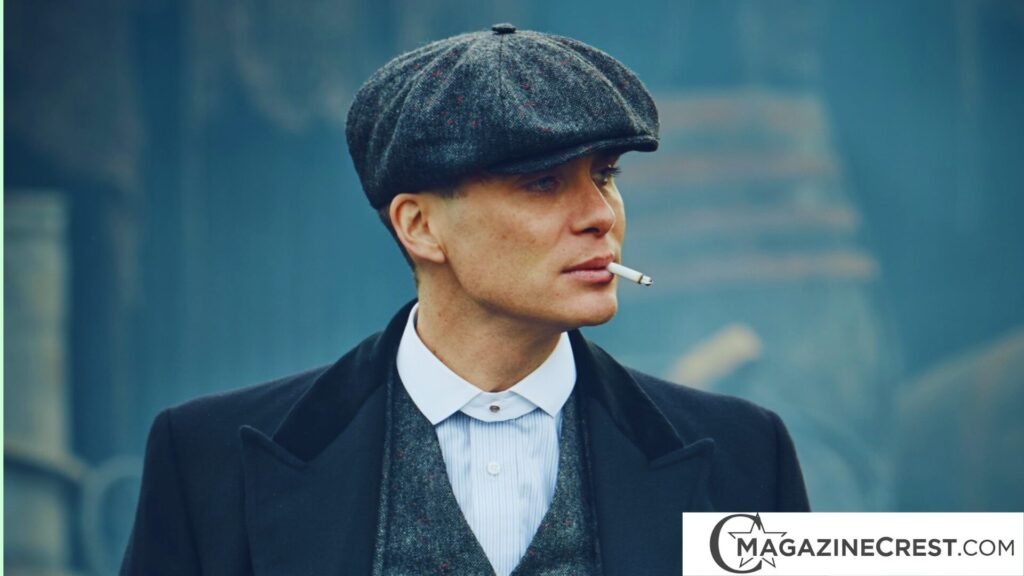
Tommy Shelby became iconic because Murphy made him feel like a real person trapped in circumstances that required him to become a myth. On the surface, Tommy is all carefully cultivated image: the haircut, the flat cap, the long coat, the ever-present cigarette. He speaks in clipped sentences, rarely raises his voice, and maintains an expression that suggests he’s calculating three moves ahead of everyone else.
But Murphy’s performance reveals the psychological fragmentation beneath Tommy’s controlled exterior. This is a man who came back from France fundamentally broken, who self-medicates with opium and alcohol, who suffers nightmares and dissociative episodes, who’s capable of extraordinary violence because the war taught him that human life is cheap. Murphy plays Tommy as someone who’s built an armor of cold rationality precisely because underneath he’s barely holding himself together.
The physicality Murphy created for Tommy became instantly recognizable: the way he walks with his hands in his pockets, slightly hunched; the sidelong glances that assess threats; the minimal facial expressions that force you to read everything in his eyes; the way he smokes constantly, using cigarettes as both prop and coping mechanism. It’s an incredibly controlled, precise performance that never feels studied or artificial.
What made Tommy Shelby resonate globally was how Murphy balanced the character’s contradictions. Tommy is a socialist who becomes a capitalist. He’s a family man who puts his family in constant danger. He’s working-class but aspires to aristocracy. He’s traumatized but functions as if he’s invulnerable. He’s calculating but capable of explosive violence. Murphy never simplifies these contradictions—he lets them coexist, making Tommy endlessly fascinating to watch.
The romantic relationships Tommy navigates across the series—with Grace, May, Lizzie, and others—further showcase Murphy’s range. With each woman, Tommy reveals different aspects of himself, from tender vulnerability to manipulative control. Murphy makes you understand why women are drawn to Tommy despite knowing he’ll ultimately disappoint them.
Cultural Phenomenon (2013-2022)
Peaky Blinders premiered to decent but not spectacular UK ratings. Then something unexpected happened: Netflix picked up international distribution rights, and the show exploded globally. Suddenly, people from Japan to Brazil to the United States were obsessed with 1920s Birmingham gangsters and the man in the flat cap.
The show’s cultural impact extended far beyond viewership numbers. The Peaky Blinders haircut—closely cropped on the sides with length on top—became a global men’s grooming trend. Flat caps and three-piece suits experienced a renaissance. Bars created “Peaky Blinders” themed cocktails. Fashion designers referenced the show’s aesthetic.
Murphy’s Tommy Shelby became a modern masculine archetype: the damaged but functional man, the working-class kid who makes it through intelligence and ruthlessness, the traumatized veteran channeling his violence into ambition. He was simultaneously aspirational and cautionary, someone you wanted to emulate and avoid becoming.
Social media amplified Tommy Shelby’s reach in ways traditional TV antiheroes like Tony Soprano or Don Draper never experienced. Gif sets of Tommy’s most badass moments proliferated across Twitter and Tumblr. Instagram accounts dedicated to Peaky Blinders style accumulated millions of followers. TikTok creators made videos analyzing Tommy’s psychology or recreating his fashion.
The “Disappointed Cillian Murphy” meme—capturing Murphy’s slightly bemused facial expression—became one of the internet’s most versatile reaction images, used to express everything from mild disapproval to existential resignation. Murphy himself seemed both amused and confused by his transformation into a meme, telling interviewers he doesn’t quite understand internet culture but appreciates that people connect with the show.
The music choices—using contemporary artists like Nick Cave, Arctic Monkeys, and PJ Harvey in period settings—created a unique sonic identity that Murphy’s performance anchored. Tommy Shelby walking in slow motion to brooding modern rock became the show’s visual signature, with Murphy’s focused intensity making the anachronism work rather than feel gimmicky.
Critical & Commercial Success
Critically, Peaky Blinders received consistent praise, particularly for Murphy’s performance. He earned nominations from BAFTA Television and won multiple Irish Film & Television Awards for Best Actor in a Lead Role. Critics noted how Murphy’s work elevated the show’s occasionally overwrought writing, finding emotional truth in dialogue that could sometimes veer toward self-parody.
The show’s viewership grew steadily across six seasons. By the final season in 2022, Peaky Blinders was one of Netflix’s most-watched international series, with episodes attracting millions of viewers globally. The series finale drew over 3.8 million viewers on BBC One alone, making it one of the channel’s most-watched programs of the year.
What’s particularly notable is how Murphy’s performance sustained quality across 36 episodes and nine years. Tommy Shelby in season six is recognizably the same character from season one, yet Murphy shows how the years and accumulated trauma have calcified him, making him harder and more isolated. It’s a rare achievement in television: maintaining character consistency while allowing meaningful evolution.
The show also showcased Murphy’s willingness to commit to physically demanding work. Scenes in the trenches, brutal fight sequences, lengthy monologues, and the show’s signature slow-motion walks all required different skills. Murphy, despite being in his late 30s and 40s during filming, never phoned it in.
Peaky Blinders Movie (2026)
In 2024, creator Steven Knight confirmed what fans had hoped for: a Peaky Blinders film that would continue Tommy Shelby’s story. Titled The Immortal Man, the movie will pick up where the series ended, with Tommy faking his death and preparing to confront Oswald Mosley and other fascist threats as World War II looms.
For Murphy, returning to Tommy Shelby after completing the series represents coming full circle. The character made him a global icon and proved he could carry a long-form narrative as compellingly as he’d inhabited supporting roles. The film, scheduled for 2026 release, gives Murphy the opportunity to conclude Tommy’s story on the big screen with the expanded scope that cinema allows.
Knight has indicated the film will have a “world war” scope, suggesting Tommy’s personal battles will intersect with the broader historical crisis of 1930s fascism. For Murphy, this means embodying Tommy at perhaps his most exhausted and philosophical—a man who’s spent decades fighting and is now facing humanity’s biggest conflict.
The anticipation surrounding the Peaky Blinders film speaks to the show’s enduring cultural resonance and Murphy’s indelible mark on the character. Tommy Shelby might be fictional, but Murphy made him feel essential to understanding post-war trauma, working-class ambition, and masculine vulnerability.
Other Notable Nolan Collaborations
Inception (2010)
Between The Dark Knight and The Dark Knight Rises, Christopher Nolan brought Murphy into another ambitious project: Inception. While not a leading role, Murphy’s work as Robert Fischer showcases his ability to find emotional truth in high-concept storytelling.
Robert Fischer, heir to a business empire, becomes the target of corporate espionage through dream infiltration. The entire plot revolves around planting an idea in Fischer’s subconscious, and Murphy’s performance makes this emotionally resonant rather than merely plot mechanics. His Fischer is grief-stricken over his father’s death, desperate for his approval even posthumously, and vulnerable to manipulation precisely because of this emotional wound.
The film’s climactic sequences in the snow fortress—where Fischer confronts his dying father in a dream within a dream—require Murphy to convey complicated feelings about parental relationships, disappointment, and reconciliation. He makes you care about Fischer even as you know everything happening to him is artificially constructed by con artists.
Inception became another massive Nolan success, earning over $829 million worldwide and winning four Academy Awards. Murphy’s supporting performance contributed to the film’s emotional weight, proving he could make audiences invest in any character, no matter how limited the screen time.
Dunkirk (2017)
Nolan’s Dunkirk offered Murphy perhaps his most minimalist role in their collaboration. Credited simply as “Shivering Soldier,” Murphy plays a traumatized British soldier rescued from a sinking ship, whose psychological state threatens everyone on the small boat attempting to rescue him.
With minimal dialogue, Murphy conveys the absolute psychological breakdown of someone who’s seen too much. The soldier is initially catatonic, then becomes violently resistant to returning to Dunkirk, and ultimately causes a tragedy through his panic. It’s a small but crucial role that reminds audiences of war’s psychological toll amidst the film’s large-scale evacuation drama.
Murphy prepared for the role by researching shell shock and PTSD, understanding that the soldier represents thousands of men who returned from war fundamentally broken. His performance is almost entirely physical—trembling hands, hollow eyes, the bodily manifestation of trauma—and it’s devastating in its specificity.
Dunkirk earned $526 million worldwide and three Academy Awards. Murphy’s wordless performance garnered critical praise for its raw honesty about mental anguish, adding to the film’s meditation on courage taking many forms—including the courage to keep living when your mind has been shattered by war.
The Nolan-Murphy Partnership
By 2017, Cillian Murphy had appeared in five Christopher Nolan films—a director-actor collaboration rivaling relationships like Scorsese-De Niro or Burton-Depp in its consistency and productivity. But what made this partnership work?
Nolan values actors who serve the story rather than demanding the spotlight. Murphy’s willingness to take roles of any size, his preparation and professionalism, and his ability to find character depth in limited material made him an ideal Nolan collaborator. Nolan, in turn, trusted Murphy implicitly, knowing he could hand him any role and Murphy would make it work.
The partnership also reflects shared aesthetic values: both prefer practical effects and real locations over CGI, both value intellectual complexity in commercial entertainment, both take creative risks while respecting audiences’ intelligence. They’re both somewhat reserved personalities who let their work speak for itself rather than cultivating celebrity personas.
This long collaboration paid off spectacularly in 2023 when Nolan finally gave Murphy a leading role—in a film about the father of the atomic bomb.
Oppenheimer: Oscar Glory & Career Peak
Landing the Lead Role
After supporting roles in five Christopher Nolan films, Murphy finally got the call he’d perhaps given up expecting: Nolan wanted him to lead his next project, a biographical epic about J. Robert Oppenheimer, the physicist who led the Manhattan Project.
For Murphy, this represented the culmination of two decades of trust-building with Nolan. The director had watched Murphy transform himself for role after role, had seen his discipline and range, and knew he could anchor a three-hour historical drama about theoretical physics, political persecution, and moral responsibility for unprecedented destruction.
Murphy immediately dove into research. He read Kai Bird and Martin Sherwin’s American Prometheus, the authoritative Oppenheimer biography, multiple times. He studied recordings of Oppenheimer’s distinctive speaking voice and mannerisms. He worked extensively on the American accent, knowing that any falseness would undermine the character’s intellectual credibility.
Physically, Murphy underwent a dramatic transformation, losing weight to achieve Oppenheimer’s gaunt appearance. At 46 during filming, Murphy pushed his body to embody a man consumed by his work and later haunted by its consequences. The hollowed-out look became central to the performance—Oppenheimer as someone literally consuming himself through intellectual and moral anguish.
Production & Performance
Filming Oppenheimer was unlike anything Murphy had previously experienced. Nolan shot primarily on IMAX 70mm film, capturing unprecedented visual scope. Murphy worked opposite a stellar cast including Emily Blunt as Oppenheimer’s wife Kitty, Robert Downey Jr. as Lewis Strauss, and Matt Damon as General Leslie Groves.
The film’s structure—interweaving Oppenheimer’s life, the Manhattan Project, and two different hearings questioning his loyalty and security clearance—required Murphy to portray the character across different time periods and psychological states. The young, confident theoretical physicist differs markedly from the haunted bomb creator differs from the defiant but worn man defending his reputation.
Murphy’s approach focused on Oppenheimer’s essential loneliness. Despite surrounding himself with brilliant minds, Oppenheimer existed in intellectual isolation. Murphy plays this as someone who sees further than those around him, including the moral implications of his creation, and must live with that foresight. The Trinity test sequence—where Oppenheimer watches the first atomic explosion—showcases Murphy’s ability to convey profound emotional complexity through minimal expression. You see pride, horror, awe, and crushing responsibility flicker across his face in seconds.
The famous “Now I am become Death, destroyer of worlds” moment—Oppenheimer’s quotation of the Bhagavad Gita—becomes devastating not because Murphy plays it dramatically but because he makes it feel like a man recognizing an awful truth about himself.
Barbenheimer Phenomenon (2023)
In summer 2023, something unexpected happened: Oppenheimer premiered on the same day as Greta Gerwig’s Barbie, creating an internet phenomenon dubbed “Barbenheimer.” The contrasting tones—serious historical drama versus pink comedy—inspired moviegoers to see both films as a double feature, generating unprecedented social media engagement and box office success for both.
For Murphy, who famously avoids social media, the Barbenheimer phenomenon represented his accidental entrance into internet culture. Memes juxtaposing his intense Oppenheimer with Barbie’s cheerful aesthetic proliferated everywhere. Murphy seemed bemused by the whole thing in interviews, admitting he didn’t quite understand why it captured people’s imagination but appreciating that it brought more audiences to the film.
Oppenheimer exceeded all expectations commercially, earning over $950 million worldwide extraordinary for a three-hour historical drama about theoretical physics. The film became a cultural event, with audiences worldwide engaging with its themes of scientific responsibility, political persecution, and moral complexity.
Cillian Murphy awards Season Sweep (2024)
As awards season began, Murphy emerged as the frontrunner for Best Actor. He won the Golden Globe for Best Actor in a Drama, his first Globe win after a nomination for Breakfast on Pluto nearly two decades earlier. The BAFTA Award followed, then the Screen Actors Guild Award.
Murphy’s acceptance speeches revealed his typically understated personality. Rather than grand oratory, he offered genuine gratitude to Nolan, his fellow cast members, and the crew. He spoke about Oppenheimer’s legacy with intelligence and empathy, avoiding simplistic moral pronouncements about the bomb while acknowledging its catastrophic human impact.
On March 10, 2024, Murphy won the Academy Award for Best Actor, becoming the first Irish-born actor to win since Daniel Day-Lewis (who won most recently for Lincoln in 2013, though Day-Lewis holds both British and Irish citizenship). Standing on the Oscars stage, Murphy thanked Nolan for entrusting him with the role, thanked his wife and sons, and paid tribute to Oppenheimer himself—”a complicated man who made difficult choices.”
The Oscar represented vindication for Murphy’s entire approach to his career. He’d never chased traditional stardom, never moved to Los Angeles, never compromised his artistic choices for commercial calculation. Yet here he was, recognized by his peers as one of the finest actors of his generation, holding the industry’s highest honor.
Critical Reception & Legacy
The critical response to Murphy’s performance was near-unanimous praise. Variety called it “a career-defining masterwork.” The New York Times described Murphy as “mesmerizing,” noting how he “carries the weight of history in every frame.” Rolling Stone wrote that Murphy “transforms Oppenheimer into a tragic figure of Shakespearean proportions.”
What distinguished Murphy’s Oppenheimer from other biographical performances was the lack of obvious “acting.” He didn’t rely on mannerisms or vocal affectations to signal character. Instead, he embodied Oppenheimer’s internal life—the racing intellect, the arrogance, the guilt, the defiance. It felt like documentation of a real person rather than performance, which is perhaps the highest compliment for any biographical work.
The role also solidified Murphy’s legacy as one of the essential actors of his generation. He’d proven he could lead a Best Picture contender, carry a three-hour drama, and deliver work that connected with both critics and massive audiences. At 47, having spent 25 years building his career, Murphy had reached a peak that felt earned rather than accidental.
Complete Filmography & Notable Roles
Early Films (1999-2004)
Murphy’s pre-Hollywood breakthrough work established his range and willingness to take risks. On the Edge (2001), an Irish drama about psychiatric treatment, showed his comfort with dark material. The film featured Murphy as a troubled young man in a mental health facility, delivering a performance that suggested the intensity he’d later bring to Tommy Shelby and Oppenheimer.
Mid-Career Highlights (2005-2015)
Beyond the Dark Knight trilogy and Breakfast on Pluto, Murphy populated these years with interesting character work. Sunshine (2007), Danny Boyle’s sci-fi thriller about a mission to reignite the dying sun, reunited Murphy with his 28 Days Later director. His physicist Capa showcased Murphy’s ability to play intelligence convincingly—you believe he understands quantum physics even though the actor doesn’t.
In Time (2011) cast Murphy against type as a villainous “timekeeper” in a sci-fi world where time is literally currency. Though the film itself received mixed reviews, Murphy’s ruthless lawman created memorable tension opposite Justin Timberlake’s hero.
Red Lights (2012) paired Murphy with Robert De Niro in a psychological thriller about paranormal debunking. In the Heart of the Sea (2015), Ron Howard’s seafaring adventure, gave Murphy a supporting role in an ensemble cast led by Chris Hemsworth. Transcendence (2014), Wally Pfister’s directorial debut, placed Murphy in a cautionary AI thriller alongside Johnny Depp.
None of these films achieved blockbuster success, but they kept Murphy working consistently, exploring different genres, and building relationships with diverse directors. This pattern—mixing guaranteed hits like Nolan films with riskier independent projects—defined Murphy’s mid-career strategy.
Recent Work (2016-2025)
Anthropoid (2016) brought Murphy back to World War II, playing Czech resistance fighter Josef Gabčík in the assassination of Nazi leader Reinhard Heydrich. The film’s brutal realism and Murphy’s committed performance earned praise even if the film itself remained relatively obscure. Free Fire (2016), Ben Wheatley’s single-location action-comedy about an arms deal gone wrong, showed Murphy’s ability to handle dark comedy.
Anna (2019), a French thriller, cast Murphy against Luc Besson’s regular collaborators in a twisty espionage tale. A Quiet Place Part II (2021) brought Murphy into one of horror’s biggest recent franchises, playing Emmett, a survivor who reluctantly helps the Abbott family navigate the post-apocalypse. His work complemented the film’s minimal dialogue, using physicality and expression to convey the character’s journey from isolation to connection.
The Delinquent Season (2018), an Irish drama about marital infidelity, returned Murphy to intimate relationship-focused storytelling. Though a small film, it demonstrated his continued commitment to Irish cinema alongside international blockbusters.
2026 Releases
Small Things Like These, based on Claire Keegan’s novella, features Murphy as Bill Furlong, a coal merchant in 1980s Ireland who discovers disturbing secrets about a local convent’s treatment of unmarried mothers. The film addresses Ireland’s Magdalene Laundries, a dark chapter in Irish Catholic history, and Murphy serves as both lead actor and producer, marking his deepening involvement in shaping Irish stories.
28 Years Later: The Bone Temple reunites Murphy with Danny Boyle and Alex Garland for a sequel to 28 Days Later. While details remain scarce, Murphy’s return to the franchise that launched his international career feels appropriately full-circle. The film promises to explore how the world has adapted (or failed to adapt) to the rage virus nearly three decades later.
Kensuke’s Kingdom, an animated adventure film based on Michael Morpurgo’s novel, features Murphy’s voice work, showing his versatility extends beyond live-action performance.
Theater Work
Despite his film success, Murphy never abandoned theater. Misterman (2011), a one-man show written and directed by Enda Walsh, showcased Murphy’s ability to command a stage alone for 70 minutes, playing a disturbed man in a small Irish town. The production traveled to New York’s St. Ann’s Warehouse, earning Murphy an Irish Times Theatre Award and Drama Desk nomination.
Ballyturk (2014), another Enda Walsh collaboration, further demonstrated Murphy’s commitment to experimental theater. The absurdist two-hander explored themes of time, routine, and existence with Murphy and Mikel Murfi creating an entire world through movement and dialogue.
These theater productions, strategically placed between film commitments, keep Murphy connected to his roots and allow him to explore different aspects of his craft away from cameras and commercial pressures.
Personal Life & Family
Marriage to Yvonne McGuinness
Cillian Murphy met Yvonne McGuinness in 1996 at a rock concert. At the time, Murphy was still focused on music and just beginning his theater work. McGuinness, an artist who works in video installations and performance art, shared Murphy’s creative sensibility without being part of the entertainment industry.
They married on August 1, 2004, in a private ceremony that reflected both their personalities—intimate, away from media attention, focused on their relationship rather than spectacle. Their marriage has lasted over two decades, remarkable in an industry notorious for destroying relationships under the pressure of fame and separation.
McGuinness’s own successful career as an artist means she understands the creative process and the demands of Murphy’s work without competing for attention. She’s exhibited internationally, including at the Tate Modern, and maintains her artistic identity independently of her husband’s celebrity.
What stands out about their relationship is its privacy. Murphy rarely discusses his marriage in interviews beyond acknowledging McGuinness’s support. They don’t walk red carpets together frequently, don’t share details on social media (Murphy has no social media presence at all), and have successfully kept their relationship largely outside public scrutiny.
Children & Parenting
Murphy and McGuinness have two sons, Malachy and Aran Murphy. The couple has been fiercely protective of their children’s privacy—their exact birthdates aren’t publicly confirmed, and photographs of them are extremely rare.
Murphy has spoken about how fatherhood changed his perspective on risk-taking and stability. While he’d previously been willing to spend months away filming anywhere in the world, having children made him more selective about projects. He’s turned down roles that would require extended absences or relocations away from his family.
The decision to raise their sons primarily in Ireland rather than Los Angeles or London reflects Murphy’s values about childhood and family. He’s stated in interviews that he wants his sons to grow up with normal childhoods, attending local schools, playing with neighbourhood friends, experiencing life without the distortions that come from being “celebrity kids.”
Murphy avoids discussing his sons in specific terms, refusing to share anecdotes that might identify them or intrude on their privacy. This stands in stark contrast to many celebrities who share their children’s lives extensively on social media or bring them to public events.
Life in Ireland
In 2015, after years of living in London while building his career, Murphy and his family moved back to Dublin. The decision surprised some observers—actors at Murphy’s level typically maintain bases in Los Angeles, London, or other entertainment hubs. But Murphy was deliberate: he wanted his family rooted in Irish culture, wanted his sons educated in Irish schools, and wanted his own life to maintain connection to his origins.
He’s spoken about walking his sons to school, grocery shopping, attending local pubs, and maintaining friendships from long before fame arrived. Dublin, while certainly aware of Murphy’s celebrity, treats him with the reserved respect that allows him to move through the city without constant attention.
Ireland also provides Murphy with artistic perspective. Living outside the entertainment industry’s geographic centers helps him maintain objectivity about his career. He’s not swept up in Hollywood’s latest trends or obsessions because he’s physically removed from that ecosystem.
The move back to Ireland wasn’t career suicide—Murphy has continued working with top-tier directors and appearing in major films. But it was a clear statement: his life and identity matter more than maximizing professional opportunities.
Private Personality
Murphy’s intense privacy in an age of oversharing makes him almost anachronistic. He has no Instagram, Twitter, Facebook, or TikTok. He doesn’t share personal photographs, discuss his daily life, or reveal details about his thoughts and feelings beyond what he chooses to discuss in carefully selected interviews.
This privacy extends to his social circle. Murphy maintains close friendships with people from his Cork youth and his early theater days—people who knew him before fame and remain indifferent to it. He’s spoken about the importance of these relationships in keeping him grounded.
Unlike many actors who become prolific on talk show circuits, Murphy gives relatively few interviews and rarely appears on late-night shows. When he does interviews, they’re typically focused on whatever project he’s promoting, with Murphy deflecting personal questions with polite but firm boundaries.
He’s mentioned not drinking alcohol, maintaining a vegetarian lifestyle since the 1990s, and preferring quiet evenings at home with his family to Hollywood parties or industry events. This ascetic quality—refusing the excess available to successful actors—reflects both personal discipline and a fundamental disinterest in celebrity perks.
What makes Murphy’s privacy notable isn’t just that he maintains it but why: he genuinely believes his personal life is irrelevant to audiences. He’s said in interviews that people should care about his work, not his private life, and that sharing personal details would be a betrayal of his family’s trust. It’s old-fashioned in its respectability, but it’s also radical in 2026 when most public figures treat their private lives as content to be monetized.
Beliefs & Philosophy
Raised in Catholic Ireland during the 1970s and 80s, Murphy has described himself as having moved away from religious belief into agnosticism or atheism. He approaches morality through ethical frameworks rather than religious doctrine, asking questions about right action rather than adherence to divine command.
His vegetarianism, adopted during the mad cow disease crisis in the 1990s, reflects both environmental concerns and ethical discomfort with industrial meat production. He’s spoken about empathy for animal suffering and the unsustainability of global meat consumption, though he avoids preaching about it.
Politically, Murphy engages selectively but meaningfully. He supported the 2018 Irish referendum to repeal the eighth amendment and allow abortion access, speaking publicly about reproductive rights. He’s backed homelessness charities like Focus Ireland and supported workers’ rights, including a 2012 sit-in by Vita Cortex factory workers fighting for their redundancy payments.
His approach to his career reflects philosophical commitments to artistic integrity over commercial success. He’s repeatedly chosen challenging roles in smaller films over easier paychecks in mediocre blockbusters. This isn’t posturing—he genuinely values the craft of acting and the collaborative process of filmmaking more than the trappings of celebrity.
Murphy’s philosophy seems rooted in a working-class Cork upbringing that valued honesty, hard work, and social responsibility. He’s spoken about his father’s public service in education and how that instilled values about contributing meaningfully to society rather than merely extracting wealth from it.
Physical Appearance & Trademarks
Signature Features
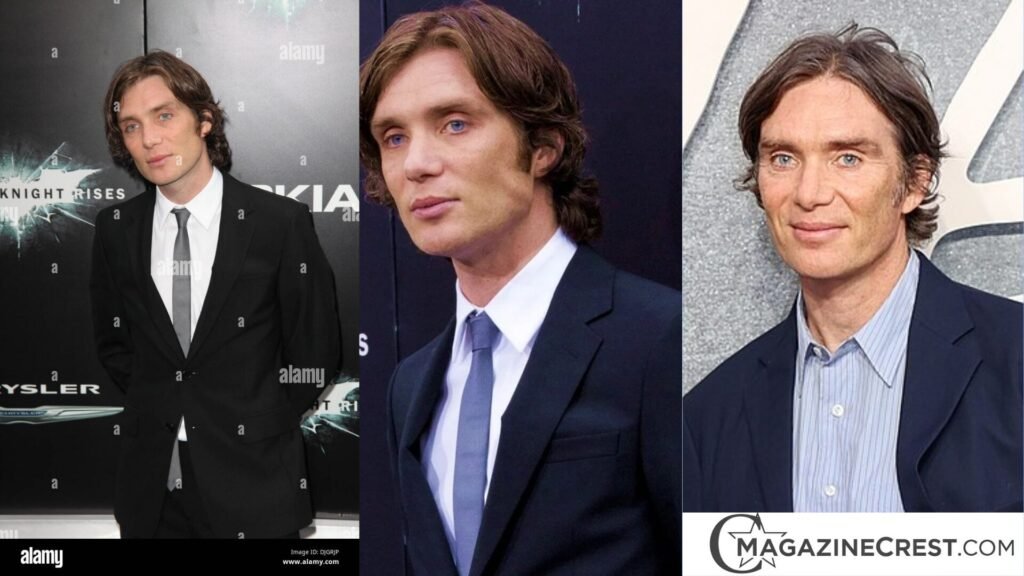
Cillian Murphy’s appearance is almost disconcertingly distinctive. Those piercing blue eyes—sometimes described as “icy” or “laser-focused”—have become his most recognizable feature. Combined with his sharp cheekbones, defined jawline, and full lips, Murphy possesses an androgynous beauty that’s served him across a wide range of roles.
At 5’9″ (1.75m) with a slim, angular build, Murphy doesn’t have the traditionally imposing physicality of action stars. Instead, his presence comes from intensity and focus. He’s described his body type as “slight,” which has limited some roles (like Batman) but opened others (like Patrick “Kitten” Braden in Breakfast on Pluto).
As Murphy has aged, his features have gained character without losing their distinctive quality. The fine lines and slight weathering make him more interesting rather than diminishing his appeal—he’s become the rare actor who seems to improve with age.
Style Evolution
Murphy’s fashion sense has evolved from indie-actor casual to sophisticated elegance. In 2015, GQ named him to its list of the 50 Best-Dressed Men in Britain, recognizing his understated but impeccable red carpet appearances.
His style philosophy seems to mirror his acting approach: less is more, quality over flash, timeless over trendy. He favors well-tailored suits in neutral colors, classic accessories, and minimal jewelry. Even at the Oscars, Murphy’s formal wear conveyed elegance without ostentation.
In 2024, luxury brand Versace tapped Murphy for a campaign, recognizing his appeal to both fashion-conscious audiences and those who appreciate artistic credibility. The partnership made sense—Versace gets an Oscar winner with genuine style, Murphy gets to explore fashion’s creative possibilities without compromising his image.
Sex Symbol Status
Murphy has an unusual relationship with sex symbol status. He’s never actively courted it, yet his distinctive looks and intense screen presence have made him a heartthrob across multiple demographics. The Tommy Shelby effect particularly amplified this—the character’s dangerous charisma made Murphy irresistible to audiences worldwide.
What’s interesting is how Murphy handles this attention. He seems genuinely bemused by it, neither embracing nor rejecting the designation. In interviews, he deflects with self-deprecating humor, suggesting he doesn’t see himself that way and finds the whole concept slightly absurd.
This reluctance might actually enhance his appeal. In an era of carefully curated social media personas and thirst traps, Murphy’s indifference to sex symbol status feels refreshing. He’s attractive because he’s talented and interesting, not because he’s trying to be attractive.
Acting Style & Methodology
Character Preparation
Murphy’s approach to character preparation is thorough but not dogmatic. He’s not a method actor in the Stanislavski sense—he doesn’t stay in character between takes or demand to be called by character names. Instead, he focuses on deep understanding of character psychology, historical context (for period roles), and physical embodiment.
For Oppenheimer, he read American Prometheus multiple times, studied recordings of Oppenheimer’s voice, learned about quantum mechanics sufficiently to discuss it intelligently, and physically transformed through weight loss. For Tommy Shelby, he researched post-WWI trauma, 1920s Birmingham culture, and practiced the specific Birmingham accent until it felt natural.
But Murphy also believes in leaving room for spontaneity. He prepares exhaustively so that during filming, he can respond organically to what’s happening rather than executing a predetermined plan. This combination of preparation and openness creates performances that feel both controlled and alive.
Versatility & Range
What distinguishes Murphy from many actors is his genuine versatility. He can play heroes (Oppenheimer, Jim in 28 Days Later) and villains (Scarecrow, Jackson Rippner). He can play transgender characters (Patrick Braden) with sensitivity and gangsters (Tommy Shelby) with menace. He’s convincing as physicists, fighters, artists, and traumatized soldiers.
This range stems partly from Murphy’s physical neutrality—he doesn’t have such distinctive physicality that he can only play certain types. But more importantly, it comes from his commitment to finding each character’s specific humanity rather than imposing his own personality onto roles.
Murphy avoids typecasting by constantly choosing different types of projects. After playing a villain in Batman Begins, he played a sympathetic revolutionary in The Wind That Shakes the Barley. After Breakfast on Pluto’s flamboyance, he took on Dunkirk’s minimalist trauma. This calculated variety ensures audiences don’t pin him down as “one kind” of actor.
Collaborator Testimonials
Christopher Nolan has called Murphy “the most versatile actor I’ve ever worked with,” noting his ability to disappear into roles of any size. Danny Boyle praised Murphy’s naturalism and emotional availability. Ken Loach highlighted his professionalism and lack of ego.
Co-stars consistently mention Murphy’s generosity as a scene partner. He’s not trying to dominate scenes or steal attention—he’s genuinely interested in making the scene work, which means supporting other actors’ performances as much as his own. Emily Blunt, his Oppenheimer co-star, described him as “completely present and giving” in every take.
Directors appreciate Murphy’s efficiency. He comes prepared, requires minimal takes to get performances right, and brings solutions rather than problems to set. In an industry where actors can be high-maintenance, Murphy’s low-key professionalism makes him a director’s dream collaborator.
Theater Roots Influence
Murphy credits his theater training with everything he’s achieved in film. Theater taught him discipline—you can’t fake it on stage for 90 minutes every night. It taught him vocal and physical control. It taught him ensemble collaboration. And it taught him that preparation is what allows spontaneity.
He returns to theater periodically specifically to maintain those skills. Film can make actors lazy—there’s always another take, always editing to fix problems. Theater demands you get it right every night, which keeps Murphy’s skills sharp.
The stage also provides creative fulfillment film can’t always offer. In theater, Murphy has more input into character development, can build performances across weeks of rehearsal, and experiences immediate audience feedback. These elements keep him excited about performing rather than treating it as merely a job.
Cillian Murphy Awards & Honors – Complete List
Major Awards
Academy Award
Best Actor (Oppenheimer, 2024)
BAFTA Awards
Best Actor in a Leading Role (Oppenheimer, 2024)
Golden Globe Awards
Best Actor in a Motion Picture – Drama (Oppenheimer, 2024)
Nominated: Best Actor – Motion Picture Musical or Comedy (Breakfast on Pluto, 2006)
Screen Actors Guild Awards
Outstanding Performance by a Male Actor in a Leading Role (Oppenheimer, 2024)
Irish Film & Television Awards
Best Actor in a Lead Role – Drama (Peaky Blinders) – Multiple wins
Best Actor – Film (various)
Empire Awards
Best Newcomer (28 Days Later, 2003)
Critics’ Choice Awards
Best Actor (Oppenheimer, 2024)
MTV Movie Awards
Nominated: Best Breakthrough Performance (28 Days Later, 2003)
Theater Awards
Irish Times Theatre Award
Best Actor (Misterman, 2011)
Drama Desk Award
Nominated: Outstanding Solo Performance (Misterman, 2012)
Honorary Recognition
In 2023, the Irish postal service An Post issued a stamp featuring Murphy as part of their Irish Film series, recognizing his contribution to Irish cinema and culture. This honor, typically reserved for the most significant Irish cultural figures, symbolizes Murphy’s status as a national treasure in Ireland.
Activism & Social Causes
Political Engagement
Unlike many actors who avoid political stances, Murphy engages thoughtfully when issues matter to him. In 2007, he participated in Rock the Vote Ireland, encouraging young people to participate in elections. His message focused on civic responsibility rather than partisan politics, but he made clear that democracy requires engaged citizens.
The 2018 Irish referendum on abortion rights (the eighth amendment repeal) saw Murphy publicly supporting abortion access. For a country still grappling with Catholic Church influence, this was a meaningful stance. Murphy’s argument focused on women’s bodily autonomy and healthcare access rather than abstract moral philosophy.
He’s also spoken about Brexit’s impact on Ireland, particularly the Good Friday Agreement and Northern Ireland’s peace process. As someone who grew up during the Troubles’ aftermath and played characters involved in Irish revolutionary history, Murphy understands these issues intimately.
Charitable Work
Murphy supports Focus Ireland, a homelessness charity, reflecting his concern about Ireland’s housing crisis. He’s participated in fundraising events and used his platform to highlight the issue, particularly as Dublin’s cost of living has exploded.
The UNESCO Child and Family Research Centre at the National University of Ireland, Galway, has received Murphy’s support for research on child welfare and family policy. His advocacy often focuses on children’s wellbeing, perhaps informed by his own experience as a father.
In 2012, Murphy joined a sit-in supporting Vita Cortex factory workers fighting for proper redundancy payments after their plant closed. This working-class solidarity reflects Murphy’s Cork upbringing and his sense of social responsibility to workers beyond his own privileged position.
Industry Advocacy
Murphy consistently champions independent filmmaking and Irish cinema. His production work with Big Things Films aims to create opportunities for Irish stories and filmmakers. Small Things Like These, which he produced and starred in, directly addresses Ireland’s Magdalene Laundries scandal—a story Irish cinema needed to tell.
He’s advocated for greater funding for Irish film production and criticized how Hollywood often treats Irish actors as commodity rather than artists with specific cultural identities. This advocacy extends to encouraging other Irish actors to maintain connections to Irish work rather than abandoning it for Hollywood careers.
Murphy’s approach to activism mirrors his overall personality: selective, thoughtful, and focused on substantive issues rather than performative gestures. He doesn’t tweet solidarity or post black squares—he uses his resources and platform for concrete support of causes he genuinely cares about.
Net Worth & Business Ventures
Estimated Net Worth (2026)
While Murphy has never publicly discussed his finances, industry estimates place his net worth between $20-25 million as of 2026. This figure reflects his strategic career choices—he’s earned substantial paychecks from Nolan films and Peaky Blinders while also taking lower-paying roles in independent films.
His Oppenheimer salary likely represented his largest single paycheck, potentially in the $5-10 million range given the film’s budget and his lead role. The Dark Knight trilogy films would have paid well, though his supporting roles meant smaller fees than leads like Christian Bale.
Peaky Blinders, across six seasons, provided steady income over nearly a decade. British television typically pays less than American network TV, but the show’s global success on Netflix likely meant bonuses and residuals beyond base salary.
What’s notable about Murphy’s wealth is what he doesn’t do with it: he doesn’t flaunt luxury, doesn’t collect exotic cars or multiple homes, and maintains a relatively modest lifestyle by celebrity standards. His Dublin home is comfortable but not ostentatious. He dresses well but doesn’t drip designer labels. His wealth provides security and creative freedom rather than serving as lifestyle fuel.
Production Work
In recent years, Murphy has expanded into producing, giving him greater control over projects and the ability to champion stories he believes in. Big Things Films, which he co-founded with producer Alan Moloney, focuses on Irish and European cinema with artistic merit.
Small Things Like These represents Murphy’s most significant producing effort to date—he both starred in and produced the adaptation of Claire Keegan’s acclaimed novella. The film addresses Ireland’s Magdalene Laundries, where the Catholic Church forcibly confined thousands of “fallen women” and subjected them to forced labor and abuse. It’s exactly the kind of difficult but necessary Irish story Murphy wants to help bring to screens.
His producing work suggests potential future directions for his career. As he moves through his 50s, Murphy might gradually shift toward more behind-the-camera work, using his industry clout to greenlight projects that wouldn’t otherwise get made.
Endorsements & Campaigns
Murphy has been highly selective about commercial endorsements, maintaining strict standards about brand alignment. The 2024 Versace campaign represented his first major fashion endorsement, chosen because Versace’s artistic heritage matched Murphy’s own aesthetic.
He’s declined numerous offers for product endorsements, particularly anything that would require social media presence or feel inconsistent with his persona. Murphy understands that his appeal partly derives from his authenticity, and obvious cash grabs would undermine that.
The An Post Irish Film stamp series that included Murphy wasn’t a commercial endorsement but an honor. However, it demonstrated his value as an Irish cultural ambassador—his image literally representing Irish achievement to the world.
Public Image & Media Presence
Relationship with Fame
Cillian Murphy’s relationship with fame is complicated by his fundamental disinterest in celebrity culture. He’s spoken openly about disliking the attention that comes with success, preferring to focus on work rather than public persona management.
This isn’t false modesty or strategic positioning—Murphy genuinely seems uncomfortable with fame’s intrusions. He’s described feeling anxious at large public events, preferring intimate gatherings with close friends. The red carpet is an obligation rather than a pleasure.
What’s refreshing is Murphy’s honesty about this discomfort. Rather than pretending to love fan attention while secretly resenting it, he’s straightforward: he appreciates people connecting with his work but doesn’t want his personal life scrutinized or his privacy invaded.
This authenticity paradoxically makes him more appealing. Audiences respect his boundaries because he’s clear about them without being hostile. He’s not entitled or condescending—he simply values privacy and expects others to respect that.
Press & Interviews
Murphy gives interviews strategically, typically around project releases, and maintains firm boundaries about discussion topics. He’ll talk extensively about his characters, working with specific directors, and the craft of acting. He’ll politely deflect personal questions.
Interviewers consistently note Murphy’s intelligence and thoughtfulness. He doesn’t give sound-bite answers or resort to celebrity clichés. Instead, he engages seriously with questions about his work, offering insights into character development, directorial collaboration, and artistic choices.
His rare talk show appearances—on The Graham Norton Show, Jimmy Kimmel Live, or Late Night with Seth Meyers—reveal his dry wit and self-deprecating humor. He’s charming when he wants to be but clearly doesn’t relish the performance aspect of promotional appearances.
The contrast between Murphy’s guardedness in press interviews and his openness in performance is striking. On screen, he reveals everything—emotional vulnerability, physical transformation, psychological depth. In interviews, he maintains control, sharing what he chooses and nothing more.
Internet Culture
The “Disappointed Cillian Murphy” meme—a screenshot of Murphy’s slightly bemused facial expression—became one of the internet’s most versatile reaction images. Murphy himself seems both amused and confused by this, telling interviewers he doesn’t really understand memes but appreciates that people engage with his work, even in unexpected ways.
TikTok and Instagram feature countless fan accounts dedicated to Murphy, sharing clips from Peaky Blinders, analyzing his performances, and celebrating his aesthetics. The Peaky Blinders aesthetic particularly dominates social media—Tommy Shelby’s haircut, style, and attitude became aspirational for millions.
What’s interesting is Murphy’s complete absence from this digital conversation. He doesn’t respond to memes, doesn’t acknowledge fan accounts, doesn’t participate in social media at all. Yet this absence doesn’t diminish his relevance—if anything, his mystery enhances his appeal to digital natives who’ve grown cynical about celebrities’ manufactured online personas.
Fan communities have formed around Murphy’s work, particularly on Tumblr and Reddit, where users share detailed analyses of his performances, create fan art, and discuss his filmography. These communities operate entirely without Murphy’s involvement or acknowledgment, creating a strange dynamic where he’s simultaneously central to and completely absent from conversations about himself.
Legacy & Cultural Impact
Irish Cinema Contribution
Cillian Murphy’s impact on Irish cinema extends beyond his own performances. He’s demonstrated that Irish actors can achieve global success without abandoning Irish identity or relocating permanently to Hollywood. His choice to return to Dublin while maintaining an A-list career opened doors for other Irish actors to make similar choices.
Murphy has consistently championed Irish stories, from Disco Pigs through The Wind That Shakes the Barley to Small Things Like These. He’s used his international platform to advocate for Irish film funding and cultural support, arguing that Irish stories have universal resonance when told authentically.
His work has also complicated stereotypical representations of Irish people in cinema. Rather than playing stage-Irish caricatures or IRA terrorists without nuance, Murphy’s Irish characters are complex, flawed, fully human. This sophistication has raised the bar for how Irish identity appears on screen.
Younger Irish actors cite Murphy as inspiration—proof that artistic integrity and commercial success aren’t mutually exclusive, that maintaining Irish roots enhances rather than limits career possibilities, and that the global audience respects authenticity over assimilation.
Influence on Acting
Murphy represents a specific model of contemporary acting: the versatile character actor who becomes a star without ever becoming a traditional leading man. He’s proven that distinctive looks, intense preparation, and chameleonic range can build a career as successful as conventional handsomeness and action-hero physicality.
His collaboration with Christopher Nolan across six films established a template for director-actor partnerships in the modern era—built on trust, artistic alignment, and willingness to serve the story rather than ego. This model contrasts sharply with the actor-as-brand approach that dominates much of Hollywood.
Murphy’s approach to career longevity—quality over quantity, selectivity over constant visibility—offers an alternative to the churn-and-burn celebrity cycle. He works steadily but not constantly, choosing projects carefully rather than maintaining constant presence. This sustainability has allowed him to work for 25 years without burning out or becoming overexposed.
Genre Contributions
Murphy’s impact on specific genres deserves recognition. 28 Days Later helped redefine zombie horror, bringing naturalism and social commentary to a genre often dismissed as schlock. His performance grounded the film’s reality, making its apocalyptic vision feel possible rather than cartoonish.
The Dark Knight trilogy’s success partly stemmed from Nolan’s commitment to psychological realism in superhero storytelling, and Murphy’s Scarecrow embodied that approach. He played a villain who was frightening because of his psychology rather than superpowers, elevating comic book adaptation into serious cinema.
Peaky Blinders revolutionized period drama by combining historical setting with contemporary sensibility. Murphy’s Tommy Shelby anchored this anachronistic approach, making a 1920s gangster feel relevant to 21st-century audiences without resorting to crude modernization.
Oppenheimer represents biographical drama at its most ambitious—three hours of historical complexity, moral philosophy, and scientific detail that somehow became a commercial phenomenon. Murphy’s performance proved audiences will engage with challenging material when executed with intelligence and craft.
Tommy Shelby’s Enduring Influence
The Tommy Shelby character achieved cultural penetration beyond the show itself. His haircut became ubiquitous in barbershops worldwide. His style influenced men’s fashion. His quotes proliferated across social media. His approach to leadership and power generated countless business motivation posts (often missing the point that Tommy is ultimately a tragic figure).
Murphy created a masculine archetype for the 2010s and 2020s: the damaged but functional man, simultaneously vulnerable and dangerous, stylish but not vain, intelligent and ruthless. Tommy Shelby reflected anxieties about masculinity in an era questioning traditional gender roles while also offering a fantasy of competence and control.
The character’s reach extended across demographics and cultures. Peaky Blinders found audiences from Japan to Brazil to the Middle East, with Tommy Shelby becoming a global icon. Murphy’s performance transcended language barriers—the intensity, the style, the barely contained violence communicated without subtitles.
Even as the series concluded, Tommy Shelby’s influence persists. The upcoming Peaky Blinders film will test whether the character maintains cultural relevance or represents a specific moment that’s passed. Murphy’s willingness to revisit the role suggests he understands Tommy Shelby’s importance both to audiences and to his own legacy.
Upcoming Projects & Future (2026-2027)
Confirmed Projects
28 Years Later: The Bone Temple (2026) brings Murphy back to the post-apocalyptic world of 28 Days Later. Danny Boyle and Alex Garland’s sequel arrives 24 years after the original, exploring how Britain (and possibly the world) has evolved with the rage virus. Murphy’s involvement remains partially mysterious—will Jim return as protagonist or appear in a supporting capacity? The project represents a fascinating full-circle moment for Murphy’s career.
Peaky Blinders: The Immortal Man (2026) continues Tommy Shelby’s story after his faked death. Steven Knight’s script reportedly places Tommy in conflict with rising fascism as World War II approaches. For Murphy, this offers closure to a character he’s inhabited for over a decade, bringing Tommy’s journey to a definitive end on the big screen rather than television’s episodic format.
Small Things Like These had a limited 2024 release but expanded into 2026, with Murphy’s dual role as star and producer raising the film’s profile. The critical acclaim surrounding Murphy’s performance as Bill Furlong suggests potential awards consideration, though the film’s difficult subject matter (Magdalene Laundries) may limit commercial appeal.
Potential Collaborations
Rumors of another Christopher Nolan collaboration persist, though nothing has been officially announced. Their six-film partnership suggests mutual interest in future projects, and Nolan has stated he considers Murphy one of his essential collaborators. Whatever Nolan directs next will likely have a role for Murphy, even if not the lead.
Irish director potential: Murphy has expressed interest in working with younger Irish filmmakers, using his clout to help get their projects financed. This mentorship approach could yield interesting results as Ireland’s film industry continues expanding.
Murphy’s production company Big Things Films has several projects in development, suggesting he might direct eventually. While Murphy has never publicly discussed directorial ambitions, his quarter-century of working with elite directors has provided a masterclass in filmmaking that could translate behind the camera.
Career Trajectory
Post-Oscar, Murphy faces interesting choices. He could leverage his Best Actor win into more leading roles in prestige dramas. He could continue mixing blockbusters with independent films as he’s always done. He could gradually shift toward producing and potentially directing while being more selective about acting roles.
What seems certain: Murphy won’t chase conventional stardom. At 49, having achieved the industry’s highest honor, he’s validated his entire approach. He doesn’t need to prove anything or compromise his values for success he’s already attained.
His career trajectory will likely follow his established pattern: quality over quantity, artistic merit over commercial guarantee, Irish roots maintained alongside international ambition. He’ll work with directors he respects, take roles that challenge him, and ignore projects that feel like easy paychecks.
The intriguing question is whether Murphy uses his increased leverage to champion difficult Irish stories and launch Irish filmmakers. His production work suggests this direction, and his legacy could ultimately include not just his own performances but his role in elevating Irish cinema more broadly.
Frequently Asked Questions
How old is Cillian Murphy?
Cillian Murphy is 49 years old as of 2026. Born on May 25, 1976, in Douglas, Cork, Ireland, Murphy is currently in his late 40s and at the peak of his creative powers. His Oscar win for Oppenheimer came at age 47, making him one of the younger Best Actor winners in recent years, though hardly a newcomer given his 25-year career. Despite approaching 50, Murphy shows no signs of slowing down, with multiple major projects scheduled for 2026 and beyond.
Where is Cillian Murphy from?
Cillian Murphy is from Douglas, a suburb of Cork in southern Ireland. Cork is Ireland’s second-largest city, known for its distinct accent, cultural identity, and creative community. Murphy grew up in a middle-class household—his father worked for the Irish Department of Education, while his mother taught French. He attended Presentation Brothers College in Cork and briefly studied law at University College Cork before dropping out to pursue acting. Despite achieving international fame, Murphy moved his family back to Dublin in 2015, maintaining his Irish roots while working globally. His Cork upbringing and Irish identity remain central to how he understands himself as both person and artist.
Cillian Murphy stands 5 feet 9 inches tall (1.75 meters). While not particularly short, his height is below Hollywood’s traditional leading-man standard, which partly explains why he’s built his career as a character actor rather than conventional star. His slender build and distinctive features—those piercing blue eyes and sharp cheekbones—create a presence that transcends physical stature. Murphy has joked about his height in relation to auditioning for Batman, acknowledging he lacked the imposing physicality Christopher Nolan needed for Bruce Wayne. However, his height has never limited his ability to command the screen, whether playing menacing villains like Scarecrow or leading men like Oppenheimer.
Is Cillian Murphy married?
Yes, Cillian Murphy has been married to Yvonne McGuinness since August 1, 2004. They met in 1996 at a rock concert when Murphy was still pursuing music and just beginning his acting career. McGuinness is an accomplished visual artist whose work includes video installations and performance art, with exhibitions at prestigious venues like the Tate Modern. Their marriage has lasted over 20 years, remarkable for the entertainment industry. The couple is notoriously private, rarely appearing together publicly and never discussing their relationship in detail. This privacy has helped protect their marriage from the pressures that destroy many celebrity relationships. McGuinness maintains her own successful career independent of her husband’s fame, and the couple prioritizes family life over Hollywood social scenes.
How many children does Cillian Murphy have?
Cillian Murphy and Yvonne McGuinness have two sons: Malachy and Aran Murphy. The couple has been fiercely protective of their children’s privacy—exact birthdates aren’t publicly confirmed, photographs of them are extremely rare, and Murphy refuses to discuss them in specific terms during interviews. This protective approach reflects Murphy’s broader commitment to separating his public work from his private family life. The family moved back to Dublin in 2015 specifically to give the boys a normal Irish upbringing away from celebrity culture. Murphy has mentioned that fatherhood changed his career priorities, making him more selective about projects that would require long absences from family. He wants his sons to experience regular childhoods—attending local schools, playing with neighborhood friends, living without the distortions that come from being celebrity children.
What is Cillian Murphy’s net worth?
As of 2026, Cillian Murphy’s estimated net worth is between $20-25 million. This figure reflects his strategic career approach—substantial earnings from Christopher Nolan blockbusters and Peaky Blinders balanced against lower-paying independent films chosen for artistic merit. His Oppenheimer salary likely reached $5-10 million given the film’s budget and his leading role. The Dark Knight trilogy provided significant paychecks, though less than leads like Christian Bale received. Peaky Blinders, across six seasons and nearly a decade, delivered steady income enhanced by the show’s global Netflix success. What distinguishes Murphy’s wealth is his modest lifestyle—he doesn’t flaunt luxury, maintains a comfortable but not ostentatious Dublin home, and focuses on financial security and creative freedom rather than excessive consumption.
How do you pronounce Cillian?
Cillian is pronounced “KILL-ee-an,” with emphasis on the first syllable. It’s an Irish Gaelic name (Cillían in original spelling) meaning “church” or “monastery,” derived from the Latin name Cilianus. The most common mispronunciation is “SIL-ee-an,” treating the ‘C’ as soft like in ‘Cindy.’ However, in Irish names, ‘C’ is typically hard. Murphy has addressed this pronunciation issue in numerous interviews over the years, patiently correcting interviewers and explaining the proper Gaelic pronunciation. The name, while common in Ireland, remains unfamiliar to many international audiences, contributing to frequent mistakes. Some people also mispronounce his surname as “Mer-fee” when it should be “Mer-fee” with emphasis on the first syllable—though this error is less common.
Did Cillian Murphy win an Oscar?
Yes, Cillian Murphy won the Academy Award for Best Actor on March 10, 2024, for his performance as J. Robert Oppenheimer in Christopher Nolan’s Oppenheimer. This was Murphy’s first Oscar win and first nomination. The victory came after a dominant awards season where he also won the Golden Globe, BAFTA, Screen Actors Guild Award, and Critics’ Choice Award for the same role. Murphy became the first Irish-born actor to win Best Actor since Daniel Day-Lewis (who holds dual British and Irish citizenship). In his acceptance speech, Murphy thanked Nolan for trusting him with the role, acknowledged his wife and sons, and paid tribute to Oppenheimer himself. The win represented vindication for Murphy’s entire career approach—building success through artistic integrity and selective project choices rather than conventional stardom.
Will there be a Peaky Blinders movie?
Yes, a Peaky Blinders film is confirmed for production with Cillian Murphy returning as Tommy Shelby. Titled The Immortal Man, the film will continue Tommy’s story after the series finale, where he faked his death. Creator Steven Knight has described the film as having “world war” scope, suggesting Tommy’s personal battles will intersect with the broader historical crisis of approaching World War II and rising fascism. The movie is expected to release in late 2026 or early 2027. This will mark Murphy’s final time playing Tommy Shelby, bringing closure to a character he inhabited across six television seasons and nearly a decade. The film format allows for expanded cinematic scope beyond television’s constraints, potentially delivering the definitive conclusion to the Peaky Blinders saga.
Is Cillian Murphy on social media?
No, Cillian Murphy has no social media presence whatsoever. He’s not on Instagram, Twitter, Facebook, TikTok, or any other platform. Murphy has been explicit about this choice, explaining that he values privacy and believes social media would intrude on his personal life while providing no benefit he desires. He’s stated that his work should speak for itself and that sharing personal details online would betray his family’s trust. This complete absence from social media makes Murphy almost anachronistic in 2026, when most public figures maintain extensive online presence. Ironically, his absence hasn’t diminished his relevance—fan accounts, memes, and discussions about Murphy flourish online entirely without his participation or acknowledgment. If you encounter social media accounts claiming to be Cillian Murphy, they’re impersonators or fan accounts, not the actor himself.
What is Cillian Murphy’s natural eye color?
Cillian Murphy’s natural eye color is bright blue—specifically a striking, piercing shade that’s become his most recognizable feature. Various journalists and co-stars have described his eyes as “icy,” “laser-focused,” “otherworldly,” and “intense.” The distinctive blue color, combined with Murphy’s ability to use his gaze for dramatic effect, has become central to his screen presence. Directors frequently frame Murphy’s face to emphasize his eyes, using them to convey emotion without dialogue. For certain roles, particularly villainous characters like Scarecrow, Murphy’s blue eyes create an unsettling effect—simultaneously attractive and disturbing. The eyes contribute significantly to Murphy’s androgynous appeal and his ability to play characters across a wide spectrum of humanity.
Did Cillian Murphy audition for Batman?
Yes, Cillian Murphy auditioned for Batman/Bruce Wayne in Christopher Nolan’s Batman Begins. However, Murphy himself has acknowledged he wasn’t right for the role—at 5’9″ with a slender build, he lacked the physical presence Nolan needed for the Caped Crusader. Christian Bale ultimately won the role. But the audition proved crucial: it introduced Murphy to Nolan and demonstrated qualities perfect for Dr. Jonathan Crane/Scarecrow. Murphy’s distinctive features—piercing blue eyes, sharp cheekbones, intensity that could flip from professional to predatory—made him ideal for a villain whose weapon was psychological rather than physical. The “failed” Batman audition thus led to Murphy playing Scarecrow across all three films in Nolan’s trilogy and established the director-actor partnership that ultimately produced six films together, including Oppenheimer, which won Murphy his Oscar.
Is Cillian Murphy vegetarian?
Yes, Cillian Murphy has been vegetarian since the 1990s, adopting the diet during the mad cow disease crisis that affected the UK and Ireland. His vegetarianism reflects both ethical concerns about animal welfare and environmental concerns about industrial meat production’s sustainability. Murphy has spoken about empathy for animal suffering and discomfort with factory farming practices, though he avoids preaching about dietary choices. The diet has sometimes affected his film work—Murphy has mentioned weight loss for certain roles (particularly Oppenheimer) being easier without meat protein, though also more challenging to maintain muscle mass. His vegetarianism fits his broader lifestyle approach: thoughtful ethical choices, environmental consciousness, and resistance to excess consumption despite having wealth that would allow any indulgence.
What accent does Cillian Murphy have?
Cillian Murphy’s natural accent is Irish, specifically from Cork in southern Ireland. The Cork accent is distinctive within Ireland—somewhat sing-song with particular vowel pronunciations that differentiate it from Dublin or Belfast accents. However, Murphy is exceptionally skilled with accents and has played characters with various dialects. He’s mastered convincing American accents for roles like Oppenheimer and Jim in 28 Days Later. He’s done Birmingham accents for Tommy Shelby in Peaky Blinders. He adapted his Cork accent for different Irish regional variations in films like The Wind That Shakes the Barley. Murphy’s vocal flexibility allows him to disappear into characters from various backgrounds, though his natural Cork accent emerges in interviews and personal appearances. His accent work reflects his broader chameleonic approach to acting—thorough preparation allowing authentic embodiment of characters from diverse backgrounds.
Will Cillian Murphy return for 28 Years Later?
Yes, Cillian Murphy is confirmed to appear in 28 Years Later, the long-awaited sequel to 28 Days Later. The film, directed by Danny Boyle with a script by Alex Garland, will explore how Britain and potentially the world has evolved nearly three decades after the rage virus outbreak. However, specific details about Murphy’s role remain unclear—it’s uncertain whether Jim returns as the protagonist or appears in a supporting capacity, and whether he’ll appear in both announced sequels (28 Years Later and 28 Years Later Part II: The Bone Temple). The project represents a fascinating full-circle moment for Murphy, returning to the franchise that launched his international film career over two decades ago. Given that Jim would now be middle-aged and hardened by decades of survival, Murphy’s return offers intriguing dramatic possibilities for exploring how his character has evolved.
Conclusion
From a Cork theater student who almost became a rock star to an Oscar-winning actor who redefined what Hollywood success can look like, Cillian Murphy’s journey defies conventional entertainment industry narratives. He’s built a quarter-century career without compromising artistic integrity, without abandoning Irish identity, without succumbing to celebrity culture’s excesses.
Murphy’s legacy extends beyond his extraordinary filmography—28 Days Later, The Dark Knight trilogy, Inception, Peaky Blinders, Oppenheimer, and dozens more. It includes his demonstration that actors can reach the industry’s summit on their own terms, that privacy and fame can coexist, that Dublin can be home while Hollywood remains workplace.
At 49, Murphy stands at an interesting juncture. He’s achieved every major accolade, played iconic characters across multiple genres, collaborated with cinema’s greatest directors, and earned global recognition while maintaining personal authenticity. What comes next could be anything: more leading roles in prestige dramas, continued character work in ensemble pieces, gradual shift toward producing and potentially directing, or simply more of the same—selective quality work that satisfies his artistic curiosity without feeding ego.
What seems certain is that Murphy will continue following his own compass rather than industry expectations. He’ll return to Tommy Shelby for the Peaky Blinders film not because he needs the paycheck but because there’s more story to tell. He’ll revisit Jim from 28 Days Later because the creative team has earned his trust. He’ll produce Small Things Like These because Ireland’s painful history deserves honest reckoning.
In 2026, Cillian Murphy remains culturally relevant not despite his privacy and selectivity but because of it. In an age of overexposure and manufactured authenticity, his genuine mystique feels refreshing. Audiences trust that when Murphy appears on screen, he’s there because the project earned his commitment, not because agents negotiated the largest paycheck.
His influence on Irish cinema, his contribution to reshaping television’s prestige through Peaky Blinders, his role in Christopher Nolan’s filmography, his Oscar-winning embodiment of J. Robert Oppenheimer—these achievements cement Murphy’s place among his generation’s most significant actors. But perhaps his greatest achievement is simpler: proving you can be wildly successful without losing yourself.
The kid from Cork who dropped out of law school, turned down a record deal to protect creative control, and chose theater over conventional career paths became exactly the artist he intended to be. That journey—from Disco Pigs to the Dolby Theatre holding an Oscar—represents more than Hollywood triumph. It represents artistic integrity meeting commercial success, personal values maintained despite industry pressure, and the long game winning against short-term temptation.
Whatever Cillian Murphy does next, he’ll do it on his own terms. And based on everything he’s accomplished so far, that’s exactly how it should be.
