

Latest Breakthroughs in Quantum Computing 2024: Challenges, and What Lies Ahead

I’ve followed quantum computing closely for years. 2024 feels like the year things genuinely shifted.
QC is no longer buried in academic research. It’s reshaping industries — from cryptography and drug discovery to finance, transportation, pharmaceuticals, and green technology.
The core idea rests on fundamental physics. Unlike digital computers that process fixed states, quantum computers work on probability. Picture a coin spinning in the air — both heads and tails at once. That’s what lets this technology tackle problems far beyond traditional computing.
According to McKinsey & Company’s Quantum Technology Monitor (Q4 2024 update), the quantum computing market is projected to reach $1.3 trillion by 2035, with a compound annual growth rate (CAGR) of 32% between 2024-2035. This represents a 15% upward revision from their 2023 forecast, driven by accelerated investment in quantum chemistry and materials science applications.
But a 2024 survey of quantum industry leaders tells a different story. Only 39% of quantum firms have more than 100 employees. Just 9% scaled significantly since 2023. Business capabilities are still catching up with ambition.
Governments have poured $34 billion into investments. Still, investors and executives risk treating QC like past buzzwords — the way they once hyped cloud.
Valentin Macheret, R&D Engineer at Scaleway Labs, called the journey a rollercoaster. That tracks. In 2024 alone, researchers published major papers, pushed forward error correction codes, and demonstrated 48 logical qubits inside a fully interconnected system of atomic qubits — driving quantum advantage into real research fields.
Practical quantum computing now has a defined path. We’re at a crucial phase where theoretical marvels must become tangible solutions.
The Engine Behind Quantum Computing | And Why It Thinks Differently
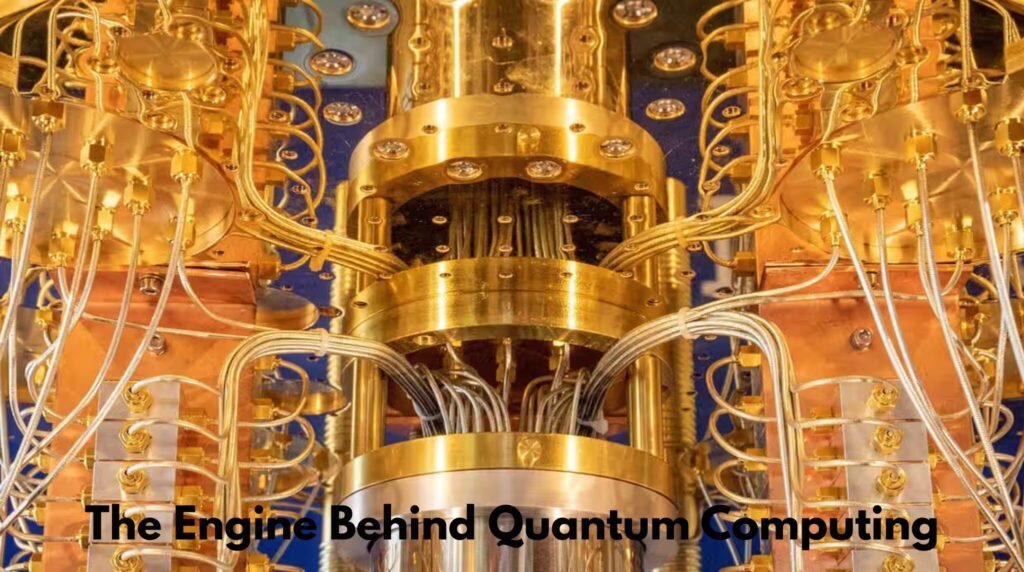
Every laptop and smartphone runs on classical computing — bits that hold only a zero or a one. That’s where traditional computing hits its ceiling.
Quantum computing breaks that ceiling. It runs on qubits — quantum bits that hold a combination of zeros and ones simultaneously. Physicists call this superposition, and it’s a core phenomenon of quantum mechanics. Subatomic particles interact and influence each other through quantum interference, giving quantum chips their extraordinary computing power.
What fascinated me most was entanglement. Two linked qubits can process four bits of information. Three can handle eight. That’s exponential scaling no classical program can match.
Think of navigating a maze. A classical program moves one step at a time. A quantum program explores multiple paths simultaneously, cutting solution time to almost nothing.
Researchers are testing five distinct qubit technologies: photonic networks, superconducting circuits, spin qubits, neutral atoms, and trapped ions. Each takes a different approach to hardware and circuit design — all serving one purpose: solving complex problems in materials simulation, optimization, and information processing that are too costly to calculate classically.
What keeps me up at night isn’t better optimization. It’s this: quantum computing could one day break RSA-2048 encryption — the algorithm securing most digital communications today. That would make current binary security standards exponentially less reliable across every network and system we rely on.
Breakthroughs in 2024: The Year Quantum Computing Stopped Being Just a Promise
2024 genuinely felt different. The gap between quantum computing and real-world applications started closing in ways I hadn’t seen before. Tech organizations stopped just researching and started delivering.
Google pushed things forward with Willow, its latest quantum chip. In just five minutes, it completed a calculation that would take supercomputers ten septillion years — longer than the age of the universe. The Chinese government pledged $15.3 billion toward quantum systems in 2022.
Stability and Error Correction Finally Got Serious
If one area delivered the most meaningful progress in 2024, it was qubit stability and error correction — the stubborn obstacles blocking quantum computing from scaling. Heat, vibration, and electromagnetic noise can all cause quantum computations to collapse mid-process.
What changed is that researchers stopped treating error correction as a future problem. The shift was from fixing individual qubits to building logical qubits — clusters that work together as one reliable unit. Teams improved coherence times, tightened gate fidelity, and redesigned chip architectures with stability as the primary goal.
The mindset flipped to quality over quantity. A smaller, stable system with low error rates consistently outperformed larger, unstable machines. This was foundational progress that makes everything else on this list possible.
Quantum Supremacy Became Practical, Not Just Theoretical
In 2024, the conversation around quantum supremacy matured. Researchers demonstrated quantum advantage on practical workloads: optimization problems, material simulations, and probabilistic modeling across finance, chemistry, and logistics. Advances in factoring large numbers raised serious, live questions about existing encryption methods and cybersecurity — not theoretical warnings but working demonstrations.
IBM, Google, and Amazon Opened the Doors
One of the most underrated breakthroughs of 2024 was accessibility. Commercial quantum cloud services from IBM, Google, and Amazon expanded significantly. Cloud-based processors, open-source SDKs, and educational sandboxes lowered the barrier to entry — letting students experiment, startups prototype, and research teams collaborate globally. Scalability became a realistic conversation rather than a distant goal.
Hybrid Systems Took Center Stage
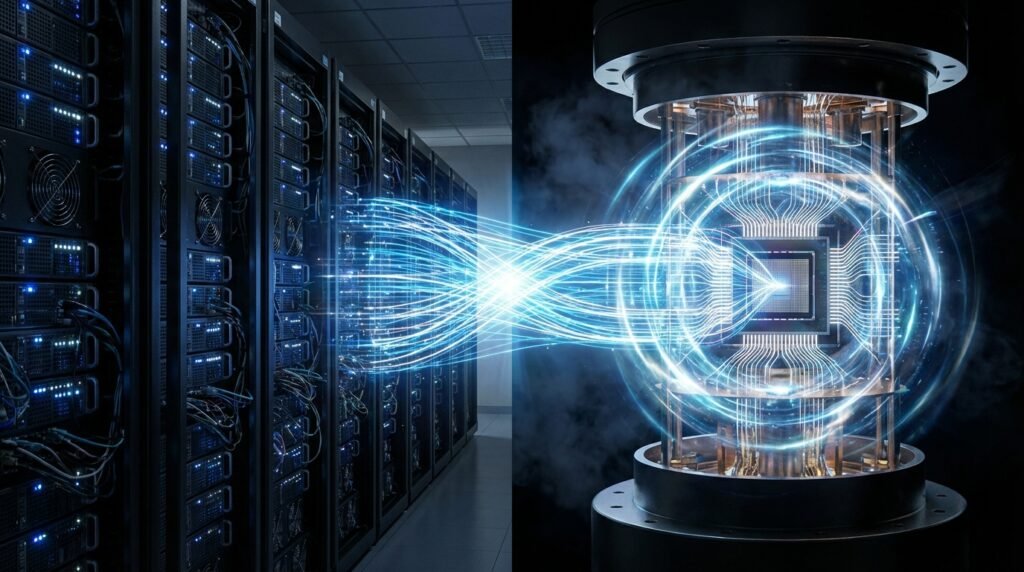
2024 made one thing clear: quantum computing is not here to replace classical computers — at least not yet. Hybrid quantum-classical systems use classical computers for preprocessing, then hand off specific calculations to quantum processors. The result is cost-effective, scalable, and far more practical than pure quantum approaches.
BQP demonstrated this with its BQPhy platform and Hybrid Quantum Classical Finite Method (HQCFM), simulating jet engines using just 30 logical qubits — compared to 19.2 million compute cores required classically. Experiments scaled from 4 to 11 qubits while preventing error propagation. Full-aircraft simulations at this level aren’t expected from classical methods until 2080. The same approach shows promise in gas dynamics, traffic flow, and flood modeling.
Microsoft, AI, and Quantum Chemistry Collided
Microsoft integrated HPC, quantum computing, and AI on Azure Quantum Elements, part of a broader wave covered in the latest AI news from October 2025 that reshaped how industries think about intelligent systems.
Researchers ran over one million density functional theory (DFT) calculations, mapping chemical reaction networks and identifying more than 3,000 molecular configurations. Encoded quantum computations achieved chemical accuracy at a 0.15 milli-Hartree error — outperforming unencoded methods and proving logical qubits with proper error correction can deliver real quantum chemistry results.
Quantum Met AI in Language Processing
Quantinuum applied quantum computing to AI and Quantum Natural Language Processing (QNLP). Their model, QDisCoCirc, used compositional generalization inspired by category theory to break text-based tasks — including question answering — into smaller, interpretable components. It tackled the notorious barren plateau problem that blocks scalability in quantum AI systems. Quantum circuits outperformed classical models in generalization, a development that intersected with major AI advances in September 2025 pushing interpretability across sensitive industries, and opening real doors for interpretability in healthcare and finance.
Drug Discovery Got a Quantum Upgrade
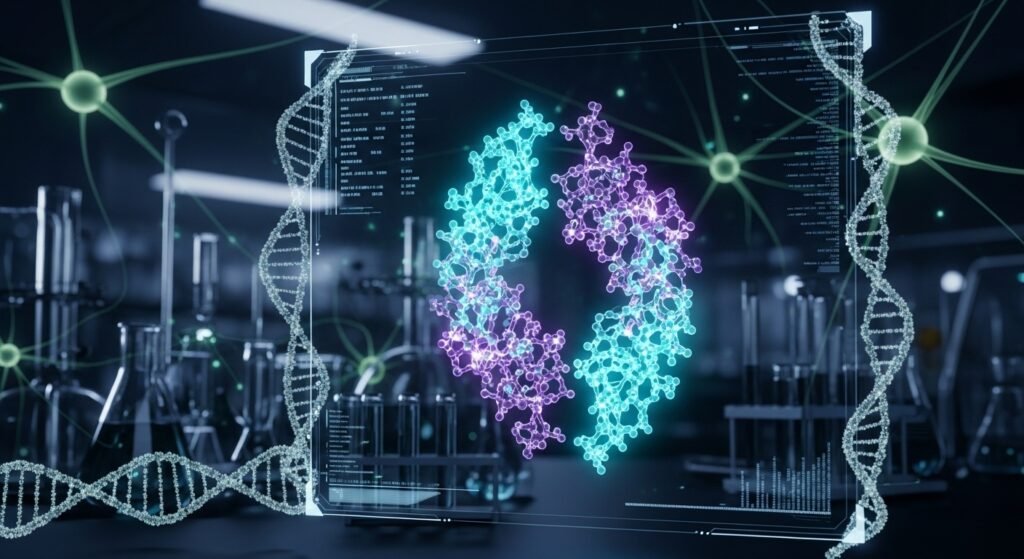
Pasqal and Qubit Pharmaceuticals, working with Sorbonne Université, used neutral atom QPUs to predict solvent configurations critical to drug discovery. Their hybrid approach combined analog quantum computing with quantum adiabatic evolution and the Ising model. Testing on real protein cavities — including the MUP-I model — their results closely matched experimental data and outperformed classical approaches. A Bayesian optimization layer handled noise and errors, shoring up reliability against current hardware limitations.
Quantum Saved Lives — Literally
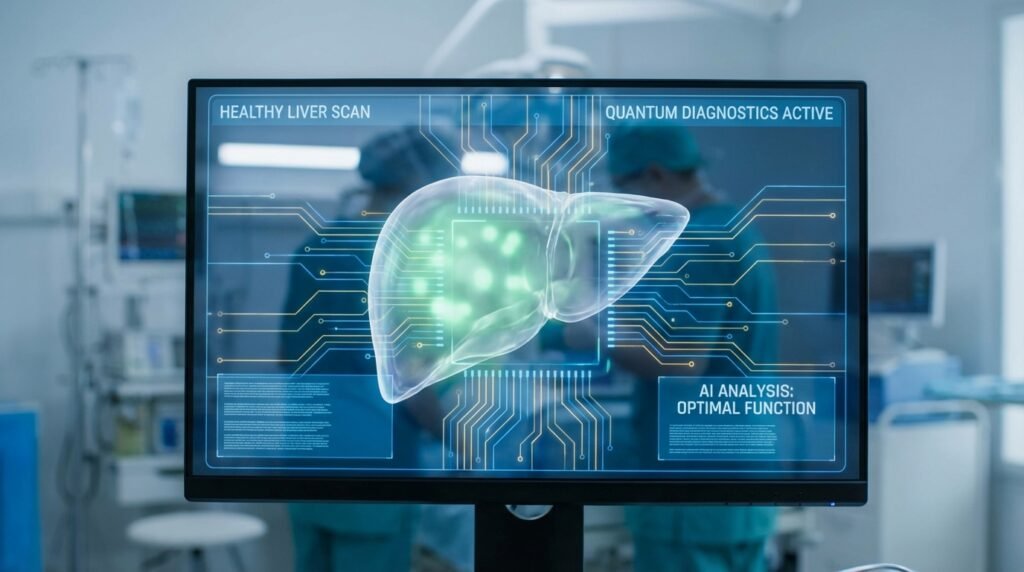
Terra Quantum built a hybrid quantum neural network (HQNN) that achieved 97% accuracy identifying healthy livers for transplantation — using just 5 qubits. It outperformed traditional algorithms and medical experts while reducing false positives that lead to transplant complications. Federated learning allowed collaborative model training across hospitals without sharing sensitive patient data, complying with EU AI Law standards and delivering consistent accuracy even with limited data. This is quantum computing doing something immediate and human.
Fusion Energy Found a Quantum Path

Riverlane and MIT’s Plasma Science and Fusion Center, backed by the U.S. Department of Energy, began developing quantum algorithms to simulate plasma dynamics — one of the National Academy of Engineering’s Grand Challenges. The work focuses on solving differential equations like the Vlasov equation, describing plasma behavior under extreme conditions. Advances in quantum error correction keep qubits stable through these simulations. The same methods extend to fluid dynamics in aerospace and oceanography.
Quantum Simulated the Cosmos
Researchers from the Autonomous University of Madrid used IBM’s 127-qubit Eagle processor to simulate particle creation in an expanding universe, studying Quantum Field Theory in Curved Spacetime (QFTCS). Despite NISQ-era noise challenges, zero-noise extrapolation and error mitigation produced results aligned with theoretical predictions, offering insights into black hole radiation, the early universe, and the intersection of quantum mechanics and general relativity. Watching a quantum circuit model spacetime stretching to generate particles is one of those moments that makes years of following this field feel worth it.
IBM Tackled Quantum Chaos
Algorithmiq and IBM Quantum used 91 qubits on the ibm_strasbourg processor to simulate many-body quantum chaos — unpredictable behaviors emerging from large numbers of interacting particles. Using superconducting transmon qubits, dual-unitary circuits, and tensor-network error mitigation, they reduced noise and validated results. The implications span weather prediction, fluid dynamics, materials science, cryptography, and hardware design. Quantum chaos appears across nearly every hard problem in science.
Matrix Math Got a Quantum Boost for AI
The University of Pisa developed a quantum subroutine that encodes matrix multiplication results directly into a quantum state, bypassing bottlenecks that slow machine learning and scientific computing. By leveraging quantum parallelism, the method avoids intermediate measurements and eliminates data retrieval delays. It supports variance calculations, eigenvalue computations, and stability analysis — all essential for training neural networks and solving equations in data science and AI.
The First Topological Qubit Became Real
For me, this was the headline of the year. Quantinuum, Harvard, and Caltech jointly demonstrated the first experimental topological qubit using a Z₃ toric code and non-Abelian anyons — particles that encode quantum information with intrinsic error resistance built in at the physics level. Using Quantinuum’s H2 ion-trap processor with 56 fully connected qubits and 99.8% gate fidelity, they built a lattice of qutrits and validated theoretical predictions from 2015 through live experiment. The path forward includes universal gate sets, system scaling, and refined error correction — laying the groundwork for fault-tolerant quantum systems with direct applications in cryptography, materials science, and AI.
Challenges Facing Quantum Computing: The Walls That Still Stand
Progress in 2024 was real — but so are the walls still standing. The closer we get, the clearer the obstacles become.
Hardware Is Still the Hardest Part
Quantum processors are extraordinarily fragile, operating at temperatures approaching absolute zero — colder than deep space. The slightest noise, heat, or vibration can cause qubit decoherence: the moment quantum properties collapse and qubits start acting like classical bits. Scaling hardware to millions of qubits — while maintaining stability, low error rates, and high coherence — remains far beyond current capabilities. No single qubit technology has pulled ahead decisively.
Error Correction and Scalability Are Deeply Linked
Quantum error correction is the central unsolved problem. Errors accumulate and compound fast without intervention. Reliable correction requires fault-tolerant logical qubits built from groups of physical qubits — demanding more hardware and more computational techniques than current systems support. Scalability issues and error correction are not separate problems. They are the same problem wearing two faces.
Software, Talent, and Cost Create a Different Kind of Barrier
The software development gap is just as real as hardware limitations. Quantum algorithms are far more complex than classical ones — requiring developers to think in superposition, entangled states, and parallel computation. Programming languages, compilers, and optimization tools are still in their infancy. Standards for hardware, software, and communication interfaces are underdeveloped, limiting compatibility across platforms. Benchmarking standards are still being defined.
Meanwhile, trained talent is scarce. The global quantum workforce is nowhere near large enough to meet demand. High costs — for talent, hardware, and complex supply chains — keep access concentrated among well-resourced organizations.
Access and Security Are the Long-Term Stakes
Cloud services are lowering the barrier to entry, but quantum systems will eventually threaten today’s cryptographic methods protecting digital communications worldwide. The race to develop quantum-resistant cryptography is already underway, and businesses navigating this shift must also understand how AI governance is evolving alongside these security demands, but widespread adoption of new standards is still years away. For anyone paying attention in 2024, these are not distant hypotheticals. They are the real stakes of getting this technology right.
What Lies Ahead for Quantum Computing
The quantum revolution is no longer a distant idea — it’s already mid-journey. The shift feels less like gradual development and more like a controlled avalanche. The most promising directions aren’t coming from one lab or one country. They’re coming from everywhere at once.
Hybrid quantum-classical systems are where the real near-term action is. Smart researchers aren’t waiting for a fully functional quantum computer to replace classical computing overnight, they’re leveraging both together. Finance, healthcare, energy, and logistics are the early adopters, using hybrid models to optimize processes, develop new materials, and tackle complex logistical challenges. Broader adoption is only a matter of time.
What genuinely excites me is quantum networking, the emerging field that could revolutionize how quantum information travels across vast distances. A quantum internet connecting systems over long distances with secure communication and distributed computing is still in its early stages, but within the next decade its potential to reshape entire industries is enormous.
What 2025 Could Bring
2025 is shaping up to be the year quantum computing moves from impressive demos to wider commercial adoption. AI-accelerated quantum solutions are closing gaps in scalability and error correction. Cloud platforms are expanding access fast. The most immediate wins will likely come in healthcare, materials science, and logistics — areas where quantum’s edge over classical systems is becoming impossible to ignore.
Teams are prioritizing qubit fidelity and coherence over raw qubit count. Standardization through common protocols and APIs is picking up through 2025. Early quantum advantage — where specific tasks show clear performance gains — becomes visible around 2026. Broader quantum advantage across diverse applications hits its stride in 2027 and beyond, alongside fault-tolerant, error-free quantum computing. Quantum usefulness — real, commercially valuable problems solved at scale — is the prize on the horizon.
Related: Japan AI Regulation News Today 2025: Complete Guide to the AI Promotion Act, Policy Updates, and What It Means for Business
Frequently Asked Questions – Latest Breakthroughs in Quantum Computing 2024
What Was the Biggest Quantum Computing Breakthrough in 2024?
The most significant breakthrough was practical progress in quantum error correction. For the first time, teams built truly scalable quantum systems by solving the stability problem that had blocked real-world progress for years.
Can Quantum Computers Replace Classical Computers Now?
No. Quantum computers are designed to complement classical systems. Hybrid models combining both are the most practical path forward right now.
Is Quantum Computing Useful for Businesses Today?
It’s early, but businesses across finance, healthcare, and logistics are actively experimenting — and finding real value in specific quantum applications even at this stage.
How Close Are We to Commercial Quantum Computers?
Commercial use is emerging but limited to specialized applications. Widespread adoption is still several years away, though the pace of development is faster than most expected.
Should Beginners Start Learning Quantum Computing Now?
Yes. The field is advancing quickly, and early learning builds a genuine long-term advantage.
What Are the Latest Breakthroughs in Quantum Computing 2024?
The biggest include improved quantum error correction, higher qubit counts, scalable logical qubits, hybrid quantum-classical computing, and meaningful real-world applications across medicine, energy, and industry.
How Does Quantum Error Correction Work?
By encoding information across multiple physical qubits to build logical qubits. This stabilizes fragile qubits, improves coherence and gate fidelity, and reduces errors in live computations — making fault-tolerant quantum computing achievable.
What Is a Logical Qubit?
A fault-tolerant unit built from several physical qubits working together to maintain stability and reduce errors under real operating conditions.
How Do Hybrid Quantum-Classical Systems Work?
Classical computers handle general processing; quantum processors handle targeted optimization and simulation tasks. This split improves overall efficiency and makes quantum applications accessible today — across portfolio optimization, drug discovery, materials science, supply chain planning, and more.
Which Industries Benefit Most From Quantum Computing?
Finance, healthcare, logistics, and materials science are pulling ahead as the clearest early winners. The computational advantage quantum brings to complex simulation and optimization is already showing up in real results, not just lab demos.
What Is Quantum Supremacy?
The point where a quantum computer completes a task infeasible for classical computers — demonstrating a clear advantage in specialized applications no classical machine can match.
What Is the Difference Between Superconducting and Neutral Atom Qubits?
Superconducting qubits excel in gate speed. Neutral atom qubits offer stronger coherence and better scalability, supporting larger logical qubit construction and more stable computations over time.
How Is Cloud-Based Quantum Computing Transforming Access?
It lets developers and researchers run quantum algorithms remotely without needing direct hardware access — democratizing access in a meaningful way and accelerating adoption across industries and academic research simultaneously.
